| Charlse VP marketing MBA in digital marketing |
TL; ডিআর: Commenting on LinkedIn is one of the highest-leverage, lowest-cost outbound moves a sales team can make — but only when comments are genuinely context-aware rather than templated. A single well-placed AI LinkedIn comment on the right post can generate more warm prospect attention than ten cold outreach messages, because it reaches people already engaged with the topic. The difference between a comment that builds pipeline and one that damages credibility comes down to four elements: specific post reference, a distinct point of view, a conversation hook, and tone that matches the individual rep’s voice.
-
Why LinkedIn Comments Are Your Most Underrated Outbound Channel
A single well-placed comment on the right LinkedIn post can put your profile in front of hundreds of warm, targeted prospects — people who are already engaged, already thinking about the topic, and already in a buying mindset.
That is something a cold DM almost never achieves.
The Visibility Math: Why One Comment Can Outperform Ten Cold Messages
When you comment on a post from a prospect or industry leader, your comment appears in the feeds of everyone who follows that person. You are not knocking on a stranger’s door. You are walking into a room where your ideal customer is already listening.
Consider a typical scenario: a sales rep comments on a VP of Operations’ post about supply chain inefficiencies. That post has 400 followers engaging with it. The comment gets 20 profile visits in 48 hours — all warm, all in-context, none of them receiving a cold message first. That is a quality-of-attention that outbound email cannot buy.
অনুসারে ম্যাককিনজি অ্যান্ড কোম্পানি, B2B buyers now complete a significant portion of their decision-making journey through passive content engagement before ever speaking to a vendor. LinkedIn comments place you directly inside that journey.
Why Most Teams Skip Commenting — And What It’s Costing Them
Manual commenting at scale is genuinely hard. A team of five reps, each targeting 10 posts per day, means 50 comments that need to be researched, written, and posted — every single day. That is hours of work before a single outreach message gets sent.
So teams skip it entirely. Or they do it inconsistently, which is almost worse — a flurry of comments one week, silence the next.
What they lose is compounding visibility. Prospects who see your team’s names repeatedly in relevant conversations start to recognize them before any formal outreach begins. That recognition shortens sales cycles. Skipping commenting does not save time. It just shifts the cost to harder, slower pipeline later.
-
The Problem With Most AI LinkedIn Comments (And Why They Backfire)
The most common AI-generated comment on LinkedIn reads something like: “Great post! Really valuable insights. Thanks for sharing.”
Every professional on LinkedIn has learned to ignore these instantly — and to distrust the person posting them.
What Generic AI Comments Signal to Prospects
A generic comment signals three things simultaneously: you did not read the post, you are using automation carelessly, and you prioritize volume over quality. For a sales team trying to build credibility, that is a damaging combination.
Prospects who recognize templated AI comments often block or mute the sender before any connection request arrives. The comment designed to open a door quietly closes it instead. Worse, it can associate your company brand with low-effort outreach at exactly the moment you are trying to build trust.
The Credibility Cost Your Team May Not Be Tracking
Most sales managers track open rates, reply rates, and connection acceptance rates. Almost none track comment-driven profile visits or the reputational cost of poor commenting quality.
Here is what that gap hides: one rep posting 20 generic AI comments per day is not just wasting effort — they are actively degrading the team’s brand reputation with the exact audience the team is trying to reach. The damage is invisible in your CRM but very visible to your prospects.
The irony is that AI পারেন produce high-quality, context-aware comments. The failure is not the technology — it is using the wrong tools or the wrong settings, then deploying them at volume.
-
What Does a High-Quality AI LinkedIn Comment Actually Look Like?
A strong AI-generated comment does four things: it references something specific from the post, it adds a distinct point of view, it invites a natural conversation, and it matches the commenter’s professional tone. Remove any one of these and the comment starts to feel hollow.
The Four Elements of a Comment That Actually Drives Profile Visits
1. Specific reference — The comment names something from the post. A statistic, a phrase the author used, a particular argument. This proves the post was actually read. 2. A distinct point of view — Not agreement for the sake of it. A genuine reaction: a counterpoint, a supporting example from personal experience, or a nuance the author did not cover. 3. A conversation hook — One question or observation that naturally invites the author or other commenters to respond. This extends your visibility beyond the first wave of impressions. 4. Tone consistency — The comment sounds like the rep, not like a press release. Different reps can have different voices. The AI should adapt to each one, not flatten them into a single corporate tone.Before and After: Generic vs. Intelligent AI Commenting
| Element | Generic AI Comment | Context-Aware AI Comment |
|—|—|—|
| Post reference | None | References specific argument or data point from post |
| Point of view | “Great insight!” | Adds supporting example or respectful counterpoint |
| Conversation hook | None | Ends with a relevant question to the author |
| Tone | Identical across all reps | Adapted to individual rep’s voice and style |
| Prospect reaction | Ignored or flagged as spam | Profile visit, follow, or reply |
| Pipeline impact | None | Warm lead in follow-up sequence |
The difference in output quality is significant — but the difference in outcome is dramatic. Context-aware comments routinely generate profile visits. Generic comments rarely do.
-
How Do You Scale AI Commenting Across a Sales Team Without Losing Authenticity?
Scaling commenting quality across a team of 10 or more reps is an operational challenge, not just a technology one. The AI can produce good comments. The system around it determines whether those comments stay good at volume.
Building a Commenting Strategy Your Whole Team Can Execute Consistently
Start with post targeting, not comment writing. Define exactly which posts your team should be engaging with:
- Prospect posts — content published directly by accounts in your ICP
- Trigger-event posts — announcements about funding, hiring, product launches, or leadership changes
- Industry leader posts — content from voices your prospects follow and trust
- Hashtag feeds — posts in niche topic areas where your buyers congregate
Once you have defined these sources, document a simple tone guide for each rep. Three sentences is enough: how they typically open, what topics they can speak to credibly, and what they should never say. Feed this into your AI tool as a voice profile. The output becomes distinctly human — and distinctly যে rep — rather than a generic template.
Review a sample of comments weekly. Ten comments per rep is enough to catch drift early before it becomes a brand problem.
Tracking Engagement: Turning Comments Into Measurable Pipeline Signals
Most teams treat commenting as a vanity activity because they do not track it properly. The metric that matters is not comments posted — it is profile visits and connection requests generated within 48 hours of a comment.
Build a simple tracking log: date, rep name, post commented on, post author (prospect or not), and profile visits in the following 48 hours. After four weeks, patterns emerge. Certain post types, certain authors, and certain comment styles will generate significantly more visits than others.
Platforms that support interaction tracking and multi-account management let managers see this data across the whole team in one place — rather than piecing together five separate LinkedIn analytics pages. This is what turns commenting from a guess into a measurable outbound channel. When you can see that comments on trigger-event posts generate three times the profile visits of generic industry content, you reallocate accordingly.
-
Turning LinkedIn Comments Into a Repeatable Lead Generation System
AI commenting is the top of the funnel. The system beneath it is what converts visibility into revenue.
Here is a workflow your team can implement this week:
Step 1 — Define your post sources. List the 10–15 prospect profiles, 5 industry hashtags, and 3 competitor follower pools your team will monitor daily. These are your engagement targets. Step 2 — Deploy AI commenting at scale. Use context-aware AI to generate comments for each rep, reviewed against their voice profile. Post 5–10 comments per rep per day, focused on the defined sources. Step 3 — Monitor profile visitors. Track which LinkedIn users visit your reps’ profiles within 48 hours of each comment wave. These are warm prospects who self-identified by clicking — they are signaling interest. Step 4 — Trigger personalized follow-up. Send connection requests with a short, specific note that references the post you both engaged with. Then move them into a message sequence built around the topic that first caught their attention. Step 5 — Export and enrich. Pull contact data from engaged prospects into your CRM for multi-channel follow-up. Email, LinkedIn message, and phone all work better when the prospect already recognizes the rep’s name from their feed.This is not a hack. It is a structured outbound motion with commenting at the entry point. The key is consistency — running this system five days a week, not sporadically.
অনুসারে Statista, LinkedIn is the top platform for B2B lead generation, consistently outperforming other social channels for professional audience targeting. The audience is there. The question is whether your team has a system to engage them at scale without burning time on manual work.
-
Which AI LinkedIn Comment Tool Should Your Team Actually Use?
Not every AI commenting tool is built for professional B2B sales environments. Here is how to evaluate your options honestly.
| Evaluation Criteria | What to Look For | Why It Matters |
|—|—|—|
| Comment quality & context-awareness | AI reads the actual post and generates relevant, non-generic responses | Generic output damages brand; context-aware output builds it |
| Multi-account support | Tool can manage multiple rep accounts from one dashboard | Managers need team-wide visibility without logging in separately |
| LinkedIn safety & compliance | Respects daily limits, uses human-like timing, avoids flag triggers | Accounts getting restricted is a serious operational risk |
| Integration with broader outreach | Comments connect to invite automation, message sequencing, and contact export | Commenting in isolation does not build pipeline; it needs to feed a funnel |
On context-awareness: this is the non-negotiable. If a tool cannot read the post and write a response that would pass as human, it is not ready for professional use. Test it with 10 posts from your actual prospect list before committing. On multi-account management: several LinkedIn automation tools offer varying levels of campaign workflow support, but their AI commenting features differ significantly in depth and quality. Some focus primarily on message sequences; others are stronger on campaign management but more limited on AI comment generation. The differentiator to press on in any evaluation is whether the tool adapts to individual rep voices or outputs a single corporate tone across all accounts.The criteria that most tools fail on is the combination of context-aware AI commenting এবং multi-account team management in a single workflow. Evaluate whether a tool handles both — because running two separate systems for commenting and outreach creates operational friction that kills consistency.
The honest recommendation: prioritize comment quality first. A tool that produces five great comments per day per rep will generate more pipeline than a tool that produces 50 forgettable ones.-
সচরাচর জিজ্ঞাস্য
Q: How do AI LinkedIn comments differ from manually written comments?AI LinkedIn comments are generated by artificial intelligence tools that read a post and produce a contextually relevant response, rather than relying on the user to write each comment from scratch. The key difference in quality lies in how much context the AI uses — tools that analyze the specific post content, the author’s argument, and the commenter’s voice profile produce output that is difficult to distinguish from a handwritten comment. Generic AI tools that apply fixed templates produce comments that prospects immediately recognize and dismiss.
Q: Do AI-generated LinkedIn comments violate LinkedIn’s terms of service?LinkedIn’s terms of service prohibit scraping, spam, and fake engagement — not automation itself. Tools that operate within LinkedIn’s daily interaction limits, use human-like timing intervals, and generate genuinely relevant content are generally compliant with platform rules. The compliance risk rises sharply when tools post at unrealistic speeds, use identical templated text across multiple accounts, or engage with users indiscriminately.
Q: How many LinkedIn comments should a sales rep post per day?For B2B sales reps, 5–10 well-targeted, high-quality comments per day is the practical sweet spot for most professional environments. This volume stays within LinkedIn’s behavioral norms, keeps each comment worthy of attention, and produces a manageable wave of profile visits to follow up on. Research consistently shows that comment quality drives engagement outcomes — 10 specific, context-aware comments will outperform 50 generic ones in both profile visits and brand perception.
Q: What makes an AI LinkedIn comment actually drive profile visits?Four elements consistently separate high-performing AI comments from ignored ones: a specific reference to something in the post (a statistic, phrase, or argument), a distinct point of view rather than generic agreement, a conversation hook that invites a reply, and a tone that matches the individual commenter’s professional voice. Remove any one of these and the comment starts to read as templated. All four together make a comment worth clicking through to learn more about the person who wrote it.
Q: How do you measure whether LinkedIn commenting is generating pipeline?The primary metric to track is profile visits within 48 hours of each comment session, not total comments posted. Supplement this with connection requests received from non-connected prospects and reply rates on follow-up messages sent to those profile visitors. After 30 days of consistent tracking, patterns emerge — certain post types and prospect profiles will generate significantly more visits than others, allowing teams to reallocate commenting effort toward the highest-converting sources.
Q: What types of LinkedIn posts should a sales team prioritize for commenting?The four highest-value post types for B2B sales teams are: posts published directly by accounts in your ideal customer profile, trigger-event posts announcing funding rounds, hiring surges, product launches, or leadership changes, content from industry voices your prospects already follow and trust, and niche hashtag feeds where your target buyers are active. Trigger-event posts in particular tend to generate the highest comment-to-profile-visit conversion because the author and their audience are already in a receptive, forward-thinking mindset.
Q: Why do generic AI LinkedIn comments damage brand credibility?A generic comment — “Great post! Really valuable insights.” — signals three things to a professional reader simultaneously: the post was not actually read, the sender is using automation carelessly, and volume is being prioritized over quality. Prospects who recognize templated AI comments often mute or block the sender before any connection request arrives, closing the door that the comment was meant to open. For sales teams, the reputational cost accumulates invisibly in the CRM but is highly visible to the exact audience they are trying to reach.
Q: How do you maintain comment authenticity when scaling across a large sales team?The foundation is a voice profile for each rep — a short document covering how they typically open a comment, which topics they can speak to credibly, and what they should never say. Feeding these profiles into the AI as persistent context ensures each rep’s comments remain distinctly human and distinctly তাহাদেরই rather than collapsing into a single corporate tone. Reviewing a sample of 10 comments per rep per week is enough to catch quality drift early before it becomes a visible brand problem.
-
Ready to scale LinkedIn engagement without sounding like a bot? সংযোগকারী lets you automate AI-powered, context-aware LinkedIn comments across your entire team — while tracking which engagements turn into profile visits and pipeline. Try it free and turn your team’s daily scrolling into a structured outbound engine.
লিখিত OneBlogADay — content that gets discovered
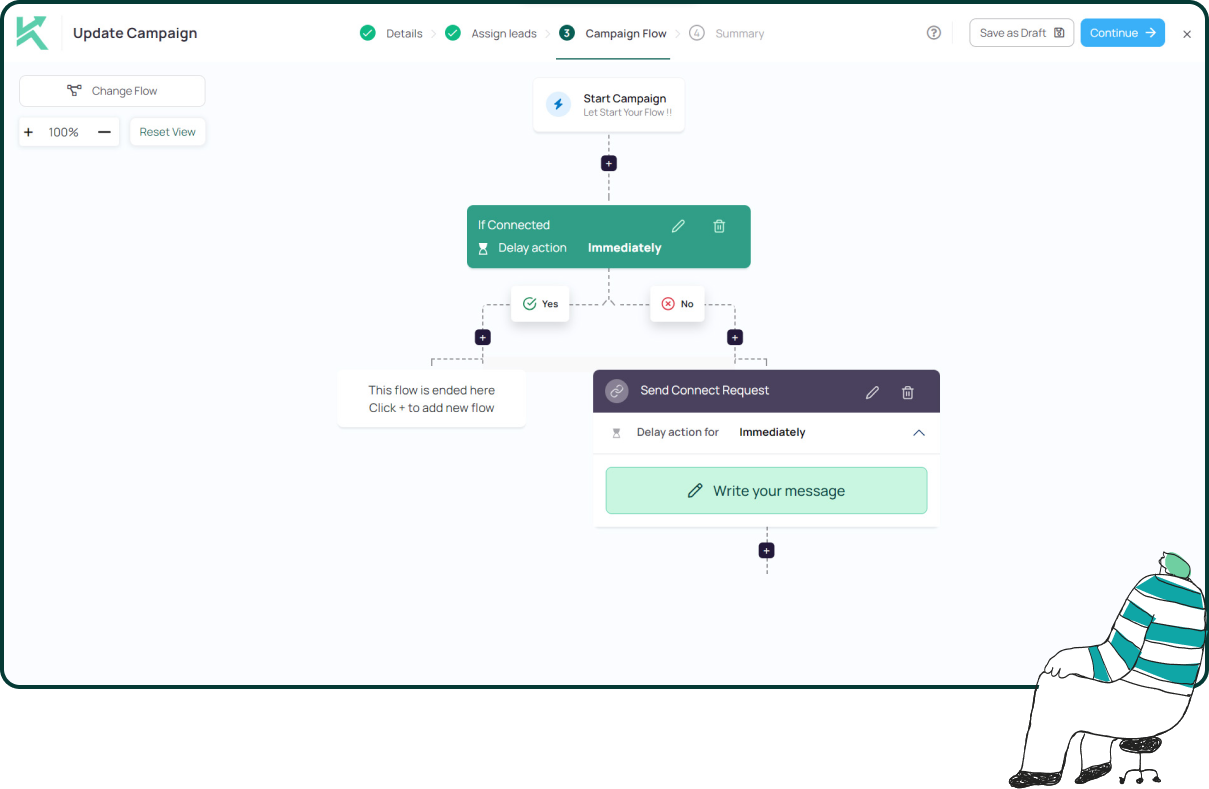
আপনার লিঙ্কডইন আউটরিচ ১১ গুণ করুন
অটোমেশন এবং জেনারেল এআই
LinkedIn Automation এবং Gen AI এর শক্তিকে কাজে লাগান যাতে আপনার নাগাল আগের মতো আরও বেশি করে নাগাল পায়। AI-চালিত মন্তব্য এবং লক্ষ্যবস্তু প্রচারণার মাধ্যমে প্রতি সপ্তাহে হাজার হাজার লিডকে সম্পৃক্ত করুন—সবই একটি লিড-জেনারেশন পাওয়ারহাউস প্ল্যাটফর্ম থেকে।