One of the most common dilemmas SDRs face is this: should a contact be added to a sequence, or should you send a direct email instead?
It is one of the most common questions in B2B sales, and getting it wrong costs you pipeline. Put a high-value prospect into a generic sequence and they feel like a number. Manually email every cold lead one by one and you burn hours you do not have. The answer is not one or the other.
It is knowing which contacts belong where, and why.
This guide breaks down exactly when to use automated sequences, when to send direct sales emails, and how to structure your daily outreach so nothing falls through the cracks.
| Aspect | Sequence (Cadence) | Direct Sales Email (1-to-1) |
|---|---|---|
| Definition | A pre-planned series of automated touchpoints sent over time | A single manually written email sent to one specific person |
| Structure | Usually 3–7 steps across multiple days | One message only |
| Automation | Fully automated once a contact is enrolled | Completely manual |
| Channels Used | Often includes emails, calls, LinkedIn steps, and manual tasks | Email only |
| Scalability | Built for scale — can handle hundreds of contacts | Not scalable — one person at a time |
| Personalization Level | Semi-personalized using templates and variables | Highly personalized and context-specific |
| Response Handling | Pauses automatically when a prospect replies | No automation or reply-based triggers |
| Best Use Case | Outreach campaigns, lead nurturing, prospecting at scale | High-value prospects, complex deals, or time-sensitive situations |
| Speed to Send | Fast once the sequence is set up | Takes time to craft each message |
| Control & Flexibility | Follows a pre-defined path with limited real-time changes | Fully customized based on the person and moment |
The core difference: sequences trade deep personalisation for scalable consistency, while direct emails trade scalability for precision.
When Should You Put a Contact Into a B2B E-mail Sequence?
Sequences work best when the outreach is repeatable, multi-step, and targets a defined audience segment. If you find yourself sending roughly the same series of messages to similar contacts, that is a sequence.
Use a sequence when:
- Cold prospecting at scale. You have a list of 50 to 500 contacts matching your ideal customer profile, and you need to run a structured outreach cadence — first email, follow-up, value add, breakup email — without manually tracking every step.
- Event or webinar follow-up. Everyone who attended the same event gets the same follow-up path. You can personalise with tokens (name, company, session attended) without writing each email from scratch.
- Re-engaging dormant leads. Contacts who went cold 60 to 90 days ago need a structured nudge sequence — typically 3 to 4 emails spaced a week apart — to see if they are still in market.
- Inbound lead nurturing. Someone downloaded a whitepaper or signed up for a free trial. A sequence drips relevant content (case study, product comparison, demo invite) over 2 to 3 weeks to move them toward a conversation.
- Multi-threading into accounts. You are reaching out to multiple stakeholders at the same company. Each persona (economic buyer, technical evaluator, end user) gets a different sequence tailored to their priorities.
- Your messaging is proven. You have already tested subject lines and email copy, you know which steps perform best, and you want to run that playbook consistently across your team.
Read more—-> LinkedIn & Cold Email: The Ultimate 1–2 Punch for B2B Lead Gen
B2B E-mail Sequence benchmarks to aim for
Before enrolling contacts, it helps to know what good looks like. Industry data from Outreach shows that across B2B sequences, the average email open rate is around 27%, while the average reply rate sits near 3%. Cold prospecting sequences that hit a 12 to 15% prospect reply rate are considered strong performers. If your warm inbound sequences are only at 10%, that is a signal to rework them.
When Should You Send a Direct Sales Email Instead?
Direct 1-to-1 emails are the right choice when the situation demands deep personalisation, immediate context, or a level of nuance that a template cannot deliver.

-
- The prospect is high-value or strategic. C-suite executives, enterprise decision-makers, or accounts that could represent significant revenue deserve handcrafted outreach. A templated sequence email to a VP of Sales at a Fortune 500 feels tone-deaf.
- You have specific, timely context. They just posted on LinkedIn about a problem you solve. They were mentioned in a news article. Their company announced a funding round. This kind of outreach must reference the exact context — something a sequence cannot dynamically generate.
- The deal is already in motion. Mid-funnel prospects who have had a discovery call, received a proposal, or are in active evaluation need personal, responsive communication — not a pre-scheduled drip.
- You are responding to a specific request. They asked a question, requested pricing, or raised an objection. This requires a tailored reply, not the next step in an automated cadence.
- The relationship already exists. Past clients, existing customers, or warm referrals should never feel like they have been dropped into a mass outreach machine. Personal touch matters here.
Read more—-> 8 Cold e-mailing Myths: Busting Email Outreach Misconceptions
Sequence vs Direct Email: How to Choose the Right Outreach Method
| Decision Question | Choose a Sequence When… | Choose a Direct Email When… |
|---|---|---|
| Is the outreach repeatable? | You are sending a similar message to 20+ contacts in the same segment | The message is unique and only relevant to one specific person |
| Does this contact require multi-step follow-up? | You need automated follow-ups, reminders, and timed touchpoints | A single email is enough to achieve the goal |
| How high is the deal value? | The outreach is mid-market or volume-driven prospecting | The deal is enterprise-level or strategically important |
| Do you have real-time context? | No recent trigger event or personalized context is available | There is a recent event, post, announcement, or trigger you can reference |
How to Structure Your Daily Outreach: Balancing Both
The most effective B2B sales reps do not choose between sequences and direct emails. They use both every day, allocated by priority. A practical daily structure looks like this:

- First 30 minutes: Complete manual sequence tasks.
Review and send any sequence steps that require personalisation (manual email steps, phone calls, LinkedIn connection requests). Clear the queue so no prospects are stuck in what Outreach calls “sequence purgatory” — waiting for a manual step that never happens. - Next 30 minutes: Send 1-to-1 emails to high-priority contacts.
These are your strategic accounts, warm referrals, trigger-based opportunities, and mid-funnel follow-ups that need a personal touch. - Mid-morning: Enrol new contacts into sequences.
Batch-add new prospects from your target list, event attendees, or inbound leads into the appropriate sequence. - Do 60 seconds of research per contact before enrolling.
Check their LinkedIn, recent company news, and role — to ensure you are placing them in the right sequence. - Afternoon: Monitor and adjust.
Check sequence analytics (open rates, reply rates, opt-outs). Pause or remove contacts who have replied, booked a meeting, or shown buying signals that warrant switching them to direct outreach.
Read more—-> How to Introduce Yourself in an Email?
Best Practices for Running Sequences Effectively
Enrolling contacts into a sequence is not a “set it and forget it” activity. These practices separate high-performing teams from those who just automate spam.
Keep sequences short and focused
Research consistently shows that reply rates drop off after 5 to 7 emails. For cold outreach, 4 to 5 emails over 2 to 3 weeks is the sweet spot. For nurture sequences, 3 to 6 emails spaced 1 to 2 weeks apart keeps engagement without causing fatigue.
Go multi-channel
The strongest B2B sequences mix email with phone calls, LinkedIn touches, and occasionally video messages. Multi-channel sequences see roughly double the response rates compared to email-only cadences, because you meet prospects where they actually engage.
Personalise beyond the first name
Dynamic tokens (first name, company name) are the bare minimum. High-performing sequences reference the prospect’s role, industry challenges, recent company news, or a mutual connection. Even 60 seconds of pre-enrolment research significantly lifts response rates.
Build a persona matrix
Do not use one sequence for everyone. Create different sequences by buyer persona (sales leader, marketing director, operations manager) and engagement level (high-touch for senior executives, low-touch for individual contributors). This ensures your messaging matches what each person actually cares about.
Monitor and optimise continuously
Treat sequences as living assets. Review analytics monthly: which steps have the highest reply rates? Which ones trigger the most opt-outs? A/B test subject lines and email copy, turn off underperforming steps, and refresh messaging quarterly. The sequences that worked six months ago may already be underperforming.
Set enrolment limits
Avoid overloading sequences with more contacts than your team can handle. If a sequence includes manual steps (calls, personalised emails), each rep should have no more than 50 to 100 active contacts in sequences at any given time. Otherwise, manual tasks pile up and automated steps stall.
Best Practices for Direct Sales Emails That Actually Get Replies
When you are going 1-to-1, every word matters more. These are not templated messages — they are personal outreach that should feel like a human wrote them, because a human did.
Lead with their world, not yours
Open with something specific to them: a LinkedIn post they wrote, a company announcement, a challenge common to their role. Do not open with your product or company name.
Keep it short
The most effective direct sales emails are 50 to 125 words. Busy decision-makers scan on mobile. If they have to scroll, you have already lost them.
One ask per email
Do not combine a case study link, a meeting request, and a product overview in one message. Pick one clear call to action: a question, a meeting link, or a specific next step.
Time it to a trigger
The best 1-to-1 emails are sent within 24 to 48 hours of a trigger event — a job change, a funding announcement, a relevant LinkedIn post, or a conference appearance. Timeliness is what makes direct outreach feel relevant instead of random.
Make it plaintext
Formatted HTML emails with logos and banners signal “marketing.” Short, plaintext emails that look like they were written by a colleague tend to perform better for sales outreach — they feel personal and get past inbox filters more reliably.
Common Mistakes to Avoid

Putting everyone into the same sequence. A CEO and a junior analyst should not receive the same cadence. Segment by persona, seniority, and intent level. One-size-fits-all sequences underperform because they speak to no one specifically.
Never graduating contacts out of sequences. When a prospect replies, books a meeting, or shows buying signals, they should immediately exit the sequence and move to direct, personal communication. Leaving them in an automated cadence after they have engaged feels robotic and damages trust.
Using sequences as a crutch to avoid real selling. Sequences handle the repetitive outreach. They do not replace actual conversations. If your entire sales motion is automated emails with no phone calls, LinkedIn engagement, or personal follow-up, your pipeline will suffer.
Sending direct emails without doing research. A “personalised” email that contains zero specific detail about the prospect is worse than a good sequence email. If you are going to go 1-to-1, invest the time to make it genuinely relevant.
Ignoring sequence analytics. If a particular email step has a high opt-out rate or low reply rate, fix it or remove it. Letting broken steps run indefinitely burns through your contact list and damages your sender reputation.
The Bottom Line
Sequences and direct sales emails are not competing tools. They are complementary parts of a structured outreach system. Sequences give you scalable, consistent multi-step outreach for defined audience segments. Direct emails give you precision, nuance, and personal connection for high-value situations.
The best B2B sales teams use both every day. They enrol cold prospects into well-built sequences with proven messaging, while reserving 1-to-1 emails for strategic accounts, trigger-based opportunities, and mid-funnel deals that need a human touch. Get the balance right, and you will stop choosing between volume and quality — you will have both.
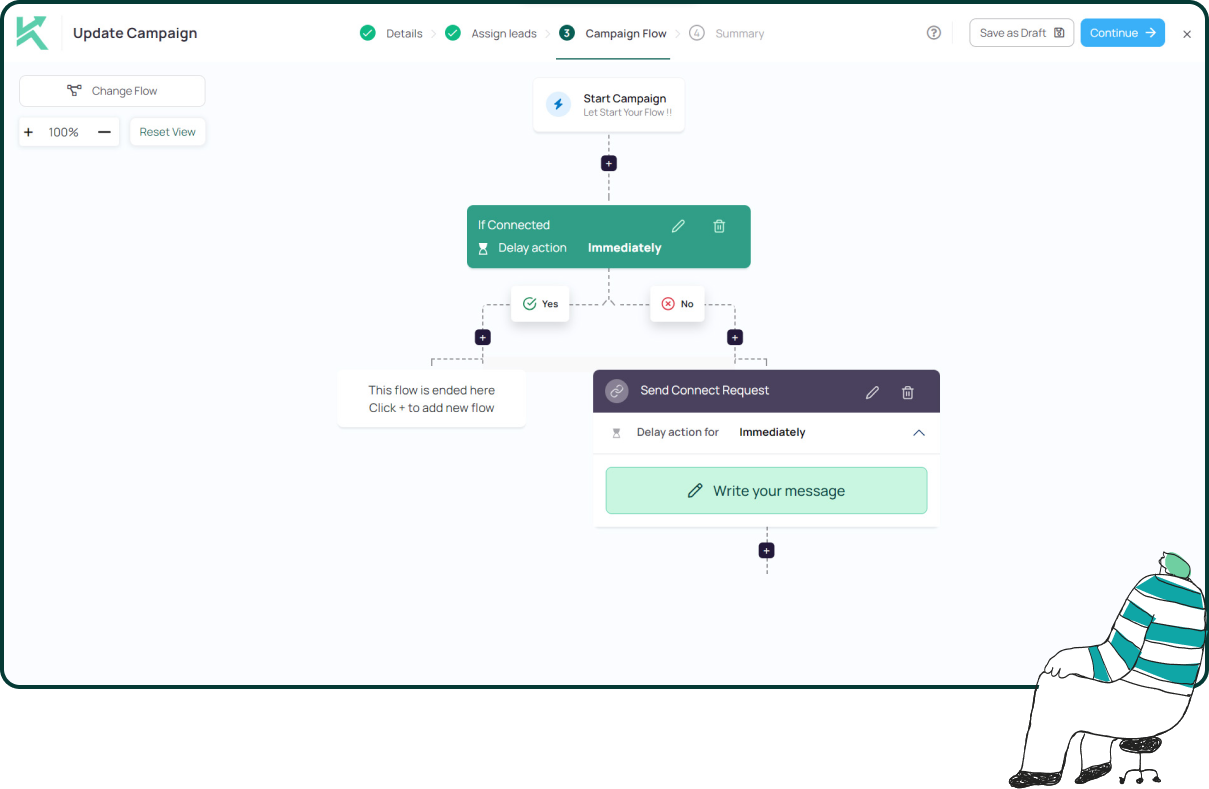
11x Your LinkedIn Outreach With
Automation and Gen AI
Harness the power of LinkedIn Automation and Gen AI to amplify your reach like never before. Engage thousands of leads weekly with AI-driven comments and targeted campaigns—all from one lead-gen powerhouse platform.
Frequently Asked Questions
Most high-performing cold outreach sequences have 4 to 5 emails over 2 to 3 weeks. Nurture sequences can be longer (5 to 7 emails) spaced further apart. Reply rates tend to drop after 5 to 7 touchpoints, so adding more emails beyond that rarely improves results.
Sequences work for both. Cold sequences focus on generating a first conversation, while warm sequences (event follow-up, inbound lead nurture, re-engagement) build on existing interest. Just make sure the messaging matches the relationship — warm leads should not receive cold-style outreach.
For cold B2B prospecting, every 3 business days is a solid starting point. For nurture sequences, every 5 to 7 days gives contacts breathing room without losing momentum. Avoid sending emails on consecutive days unless it is a time-sensitive situation like event registration.
Yes. Multi-channel sequences that combine email, phone, and LinkedIn see roughly double the response rates compared to email-only cadences. Phone calls are especially effective for senior decision-makers who receive hundreds of emails daily but far fewer voicemails.
Remove or pause contacts immediately when they reply (positive or negative), book a meeting, indicate they are not interested, or show a buying signal that warrants switching to personal outreach. Most platforms pause sequences on reply automatically, but always verify.
A 12 to 15% prospect reply rate on cold outreach is considered strong. Average email reply rates across all sequence types sit around 3%, but this varies widely by industry, persona, and how well the sequence is personalised. If your cold sequences are below 5%, rework your messaging and targeting.
No. High-performing teams segment their sequences by persona, industry, company size, or pain point. Sending the same sequence to everyone usually lowers reply rates because the messaging feels generic and less relevant.
The terms are often used interchangeably, but technically a sequence usually refers to automated email steps, while a cadence includes multiple channels such as calls, LinkedIn touches, tasks, and emails scheduled together.
Most effective outbound sequences run between 14 and 30 days. Shorter sequences may not provide enough touchpoints, while longer ones risk fatigue unless the messaging evolves meaningfully at each step.
Yes, especially the first email. Personalization increases reply rates significantly. Even light personalization such as referencing a recent post, company update, or role-specific challenge can dramatically improve engagement.