Can AI Agents Actually Handle Replies Without Sounding Like Robots?
AI has completely changed the way LinkedIn outreach works. What used to take sales teams hours of manual messaging, follow-ups, and reply management can now be handled in minutes with the help of automation and intelligent systems. But even with all this progress, one question still comes up again and again from founders, marketers, and revenue teams:
Can AI really reply like a human, or does it still sound robotic?
It’s a fair concern. Let’s break this down honestly, practically, and strategically so you can understand what’s actually happening behind the scenes and how to use AI replies the right way.
Read more—> Role of AI in Modern LinkedIn Networking
Why Robotic Replies Became a Concern in LinkedIn Automation
Early LinkedIn automation tools relied heavily on rigid templates. These tools didn’t think. They didn’t analyze. They simply inserted names into prewritten lines and sent them out in bulk.
- “Hi {FirstName}, I came across your profile…”
- “Just following up on my previous message…”
- “Curious if you had a chance to review…”
Because these messages were repetitive and predictable, recipients quickly learned how to spot them. As a result, many campaigns started seeing lower response rates, reduced trust, and sometimes even account restrictions. In some cases, brand perception took a hit because outreach felt impersonal and automated.
So the fear wasn’t exaggerated. Earlier automation really did sound robotic.
What Changed: The Rise of AI Reply Agents
Modern LinkedIn automation tools powered by AI are very different. Instead of sending fixed templates, they analyze conversations in real time and generate responses based on context, tone, and intent.
Today’s AI systems can:
- Understand what a prospect actually said
- Detect sentiment and tone
- Identify whether someone is interested, hesitant, or just curious
- Generate a response that fits naturally into the conversation
This is what separates traditional automation tools from true AI agents. One sends scripts. The other participates in conversations.
Watch more—-> How to Automatically Identify & Message leads who visit your LinkedIn Profile | Konnector.ai
How AI Generates Human-Like Replies
Behind the scenes, a well-built AI reply system usually follows a structured decision process. It might look simple from the outside, but internally it’s running multiple checks before sending anything.
Step 1: Message Analysis
The system scans incoming replies for tone, keywords, questions, buying signals, and sentiment indicators.
Step 2: Intent Detection
It categorizes responses into clear intent groups such as interested, not now, objection, referral, neutral reply, or question.
Step 3: Context Awareness
It reviews conversation history, campaign stage, profile data, tags, and previous interactions.
Step 4: Response Generation
Instead of pulling a template, it dynamically creates a reply aligned with your brand voice, outreach goal, and conversation context.
This layered process is why modern AI replies can feel surprisingly natural and relevant.

When AI Replies Actually Sound Human
Not every automated message sounds natural. The difference comes down to how the system is configured. When these five elements are present, AI replies feel genuinely conversational.
1. Context Awareness
Generic responses sound robotic. Context-aware responses sound human.
Weak reply: Thanks for your response. Let me know if interested.
Strong reply: Totally understand. Timing matters. Would it make sense to reconnect next quarter?
2. Tone Matching
Good AI adapts to how someone writes. If a prospect replies casually, the tone mirrors that. If they respond formally, the reply stays professional. This subtle mirroring is one of the strongest signals of human-like communication.
3. Intent Recognition
Smart systems don’t force a pitch. They respond appropriately.
Prospect: Not looking right now.
Smart reply: Got it, and I appreciate the honesty. Out of curiosity, what solution are you currently using?
4. Conversation Memory
Human conversations reference earlier messages. AI should do the same.
Weak: Would love to tell you about our platform.
Strong: Since you mentioned you’re exploring automation tools, I can share a quick overview if helpful.
5. Guardrails and Control
The best AI systems operate within defined limits. They follow tone rules, approved messaging frameworks, compliance boundaries, and campaign goals. This prevents awkward or off-brand responses while still keeping conversations dynamic.

Why Some AI Replies Still Sound Robotic
If you’ve ever received an obviously automated message, it usually isn’t because AI is incapable. It’s because the setup behind it is weak.
Robotic replies typically happen when:
- Prompts are poorly written
- Tone guidelines are missing
- Context memory isn’t enabled
- Personalization data is limited
- No conversation logic is defined
In simple terms, AI replies are only as good as their configuration. Just like a CRM is only as good as its data, an AI agent is only as good as its inputs and rules.
The Smartest Way Teams Use AI Replies
High-performing outreach teams rarely hand over conversations completely. Instead, they use a hybrid approach that balances automation with human oversight.
| Stage | AI Role | Human Role |
|---|---|---|
| First reply | Drafts message | Reviews and approves |
| Follow-ups | Sends automatically | Monitors engagement |
| Objections | Suggests responses | Edits tone |
| Closing | Assists with context | Leads conversation |
This structure allows teams to scale conversations without losing authenticity.
Where AI Reply Agents Work Best
AI replies perform exceptionally well in situations that involve patterns or repeated interactions. Some of the strongest use cases include:
- Lead qualification conversations
- Responding to inbound interest
- Handling high-volume outreach replies
- Sorting warm versus cold leads
- Answering frequently asked questions
- Sharing resources or links
- Booking meetings automatically
These are structured interactions where speed, consistency, and relevance matter more than improvisation.
When You Should Not Fully Automate Replies
Even the best AI should not replace humans in certain moments. You should always step in manually when:
- Conversations become sensitive
- Deals involve high value
- Negotiations begin
- Emotional context appears
- Trust-building is critical
In these situations, AI should support you, not replace you.
How to Tell If Your AI Replies Are Working
The success of AI-powered outreach isn’t measured by whether automation is involved. It’s measured by how prospects respond.

Prospects don’t care if AI helped craft the message. They care whether the reply feels relevant and useful.
The Real Answer
So can AI actually reply like a human? Yes, it can. But only when it’s configured strategically and used thoughtfully.
AI itself isn’t robotic. Poor setup is.
When implemented correctly, AI reply agents can understand context, match tone, adapt messaging, continue conversations, qualify leads, and book meetings while still sounding natural.
And that’s the real advantage.
They allow you to scale conversations without scaling effort.
Final Takeaway
The question isn’t whether AI can sound human anymore.
It’s whether you’re using it strategically enough for it to sound human.
The teams winning on LinkedIn today aren’t choosing between automation and authenticity. They’re combining both to create conversations that scale and still feel real.
Turn Every Reply Into a Real Conversation. Stop Sending Messages. Start Conversations.
Templates get ignored. Conversations get replies.
Konnector’s AI analyzes replies, understands intent, and generates responses that feel natural, relevant, and human — so you can scale outreach without sacrificing authenticity.
Smarter replies. Stronger conversations. Faster pipeline.
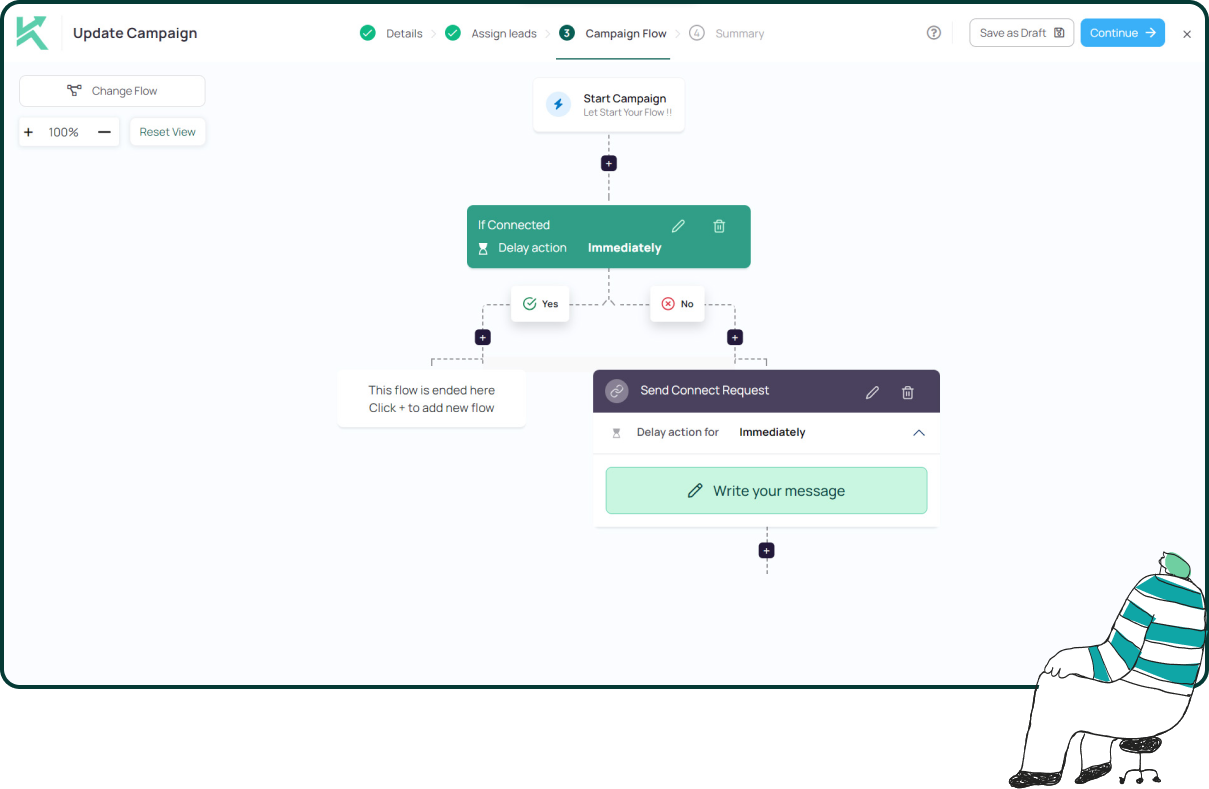
11x Your LinkedIn Outreach With
Automation and Gen AI
Harness the power of LinkedIn Automation and Gen AI to amplify your reach like never before. Engage thousands of leads weekly with AI-driven comments and targeted campaigns—all from one lead-gen powerhouse platform.
Frequently Asked Questions
Yes. Advanced AI outreach tools can automatically reply to LinkedIn messages by analyzing incoming responses, detecting intent, and generating contextual replies that match tone and conversation history.
They only sound robotic when poorly configured. Modern AI systems trained with tone rules, context awareness, and personalization data can generate natural, human-like responses.
Yes, if you use compliant automation tools that follow LinkedIn safety limits, pacing rules, and human-like interaction patterns. Unsafe tools that spam or send bulk templates risk restrictions.
AI reply tools analyze:
message sentiment
keywords
intent signals
conversation history
Then they generate a reply aligned with your goals and brand voice.
LinkedIn automation sends prewritten sequences.
AI LinkedIn replies actually analyze conversations and generate dynamic responses.
Automation sends messages.
AI holds conversations.
Yes. Many AI systems can detect objections such as “not interested” or “not now” and respond intelligently with clarification questions or soft follow-ups instead of pushing a pitch.
No. The best results come from hybrid workflows where AI handles routine replies and humans step in for high-value or complex conversations.
Key advantages include:
faster response time
higher reply rates
scalable outreach
consistent messaging
better lead qualification
Yes. AI can personalize replies using profile data, conversation history, campaign stage, and CRM insights to make responses feel relevant and tailored.
You improve AI reply quality by:
defining tone guidelines
adding personalization fields
enabling conversation memory
setting intent-based logic
training it on real conversations