Email still converts. LinkedIn still opens doors.
But when you combine LinkedIn outreach + strategic email sequences, you create a multi-touch system that feels intentional — not intrusive.
Most people either:
* Spam LinkedIn
* Or send cold emails with zero context
The professionals who win?
They connect both channels.
If you’re searching for:
* LinkedIn outreach email examples
* Email sequences for LinkedIn prospecting
* Cold email sequence for B2B LinkedIn leads
* Follow-up email after LinkedIn connection
* LinkedIn + email outreach strategy
This guide gives you practical, conversion-focused frameworks you can use immediately.
Why Combine Email with LinkedIn Outreach?
LinkedIn builds familiarity.
Email builds momentum.
LinkedIn is where credibility happens.
Email is where decisions happen.
Here’s why this combination works so well:

LinkedIn starts the conversation.
Email moves it forward.
When done correctly, this doesn’t feel like “outreach.”
It feels like continuity.
Now let’s break down 5 high-performing email sequences designed specifically for LinkedIn outreach campaigns.
Sequence #1: The Warm LinkedIn Connection → Email Nurture
Best For:
B2B services, SaaS demos, consulting, agencies, founders.
This is the cleanest way to transition from LinkedIn to inbox.
Step 1: Engage on LinkedIn (Day 1–3)
- View profile naturally
- Like or comment meaningfully on a post
- Send a personalized connection request
The goal isn’t to pitch.
It’s to be visible.
Step 2: Email #1 – Soft Introduction (Day 4)
Subject: Enjoyed your post on {{Topic}}

Example Angle:
“Noticed you’re scaling outbound at {{Company}} — curious how you’re currently handling lead qualification?”
No pitch. Just relevance.
Email #2 – Value Add (Day 7)
- Share one short insight, stat, or micro-case study
- Keep it helpful, not salesy
Email #3 – Direct Ask (Day 10)
- Clear, confident CTA
- Offer 1–2 time options
This sequence feels natural because LinkedIn did the warming first.
Sequence #2: The “Profile Viewed” Trigger Sequence
Best For:
Inbound interest signals.
If someone views your LinkedIn profile after engagement, that’s intent.
Not guaranteed interest — but signal enough to act on.
Email #1 – Curiosity Email
Subject: Should we connect properly?
- Mention recent overlap subtly
- Keep tone conversational
- Offer clarity, not a pitch

Example:
“I might be wrong, but it seems like our paths crossed recently. If improving {{specific outcome}} is something you’re exploring, happy to share what we’re seeing work.”
You’re opening a door — not pushing them through it.
Email #2 – Social Proof
- 1–2 sentence case study
- Clear quantified result
Email #3 – Close Loop
- Short and respectful follow-up
- “Should I close the loop here?”
Clean. Professional. No pressure.
Sequence #3: Event or Webinar-Based Outreach
Best For:
LinkedIn event attendees, webinar participants, conference connections.
Context already exists — leverage it.
Email #1 – Shared Context
Subject: Quick follow-up from {{Event}}
- Reference the session
- Highlight one takeaway
- Ask about their biggest related challenge
This makes your email feel timely — not random.
Email #2 – Resource Share
- Short checklist
- Blog post
- Short Loom breakdown
Keep it useful. No aggressive CTA.
Email #3 – Strategic Question
- “Is solving {{pain point}} something you’re prioritizing this quarter?”
Event-based outreach often outperforms cold campaigns because trust is already partially built.
Sequence #4: The Direct Problem-Solution Sequence
Best For:
Cold LinkedIn prospecting + targeted email.
This is sharper. More direct.
Email #1 – Clear Problem Framing
Subject: Quick question about {{specific metric}}
- State the problem clearly
- Demonstrate industry awareness
- Suggest improved outcome

Example:
“Many {{industry}} teams struggle with low reply rates despite heavy LinkedIn activity. Are you seeing similar trends?”
You’re diagnosing, not pitching.
Email #2 – Mini Breakdown
- 3 short bullet improvements
- Position yourself as a guide
Email #3 – Short Close
- One-line CTA
- No calendar overload
The sharper your problem framing, the shorter your email needs to be.
Sequence #5: The Re-Engagement Sequence
Best For:
Old LinkedIn connections or stalled conversations.
This is where most revenue hides.
Email #1 – Reopen the Loop
Subject: Circling back
- Reference past interaction
- Acknowledge timing may not have worked
Email #2 – Updated Value
- New result
- New data point
- New industry shift
Email #3 – Permission-Based Close
- “Would it make sense to revisit this now?”
Respectful re-engagement often performs better than cold outreach.
Best Practices for LinkedIn + Email Outreach in 2026
1. Respect Timing
- Never email same day as connection request
- Allow natural interaction window
2. Keep Emails Under 120 Words
- Short emails win
- Clarity > cleverness
3. Personalize Beyond First Name
- Reference role
- Reference initiative
- Reference recent activity
4. Limit Sequence to 3–4 Emails
- Over-following damages brand perception
5. Use Signals, Not Volume
- Profile views
- Post engagement
- Event participation
Modern outreach rewards precision, not pressure.

Common Mistakes in LinkedIn Email Sequences
- Pitching in the first touch
- Sending 6–8 follow-ups
- Copy-paste templates with zero context
- Overusing aggressive subject lines
- Dropping calendar links immediately
Relevance beats volume. Every time.
How to Scale These Sequences Without Sounding Automated
Manual follow-ups don’t scale.
But sloppy automation kills credibility.
The real solution:
- Trigger-based automation
- Segmented campaigns
- Engagement-based branching
When automation respects:
- Timing
- Context
- Restraint
It enhances professionalism instead of replacing it.
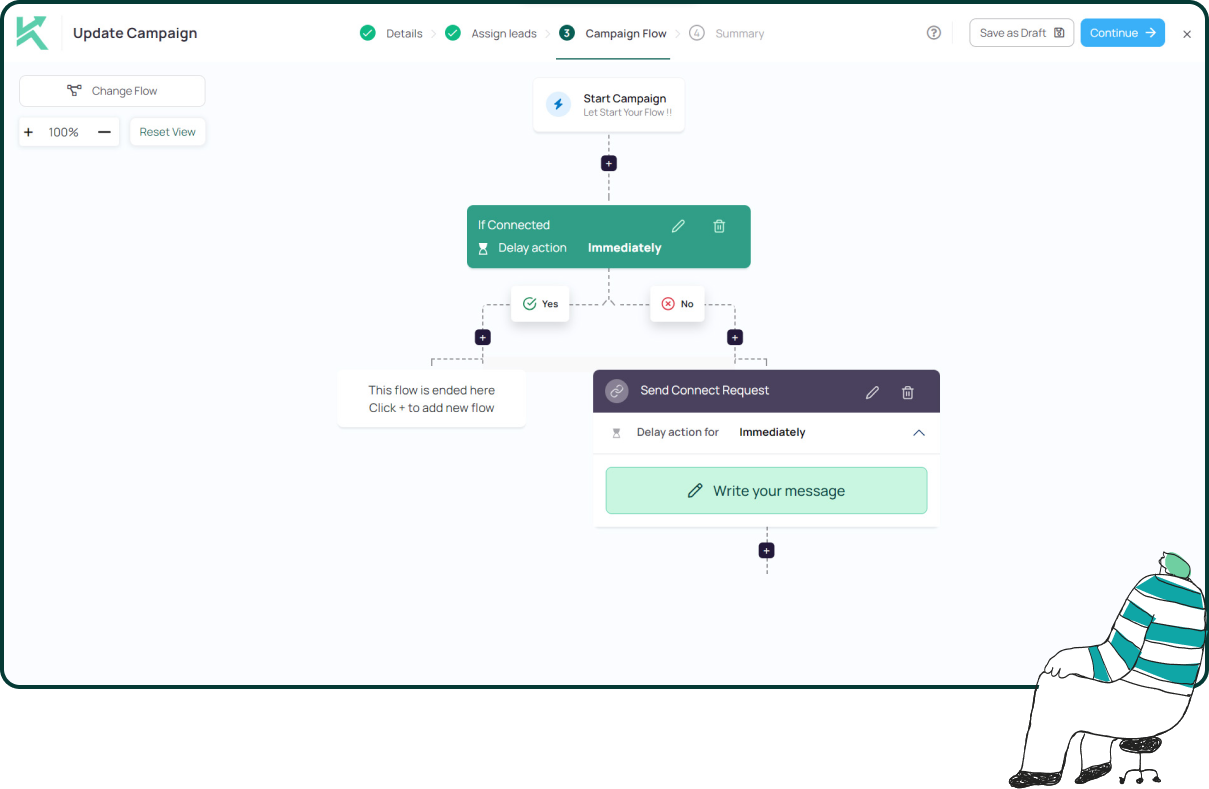
If you want to build LinkedIn outreach sequences that trigger emails based on connection status, profile views, or engagement signals, platforms like Konnector.AI allow you to structure compliant, signal-based campaigns without spam-style messaging.
Final Takeaway
Winning LinkedIn outreach isn’t about sending more messages.
It’s about:
- Layering LinkedIn + email strategically
- Keeping sequences tight and intentional
- Leading with insight
- Closing with confidence — not pressure
Start with one sequence.
Test it for 30 days.
Refine your messaging.
Professional outreach isn’t noise.
It’s structured consistency.
11x Your LinkedIn Outreach With
Automation and Gen AI
Harness the power of LinkedIn Automation and Gen AI to amplify your reach like never before. Engage thousands of leads weekly with AI-driven comments and targeted campaigns—all from one lead-gen powerhouse platform.
Frequently Asked Questions
A LinkedIn outreach email sequence is a structured series of follow-up emails sent after initial LinkedIn engagement. It combines LinkedIn connection, interaction, and email follow-ups to build familiarity and move conversations toward meetings or conversions.
The ideal LinkedIn email sequence includes 3–4 emails. More than that can feel aggressive and reduce reply rates. Short, focused sequences typically perform better than long follow-up chains.
Wait 2–4 days after sending or accepting a LinkedIn connection request before sending your first email. This creates a natural transition instead of making the outreach feel automated or pushy.
Yes. Multi-channel outreach (LinkedIn + email) often increases reply rates because prospects recognize your name from LinkedIn before seeing your email. Familiarity improves trust and response likelihood.
The first email should reference your LinkedIn interaction, highlight relevance to the recipient’s role or goals, introduce a clear value proposition, and end with a low-pressure question.
High-performing outreach emails are typically under 120 words. Clear, concise messaging increases readability and improves response rates.
Common mistakes include pitching in the first message, sending too many follow-ups, using generic templates, overloading emails with links, and ignoring engagement signals.
LinkedIn is better for warming the relationship. Email is better for structured messaging and conversion. The most effective strategy combines both channels strategically.
Go beyond using the recipient’s first name. Reference their company initiatives, recent LinkedIn posts, role responsibilities, industry challenges, or event participation to show genuine relevance.
Yes, but automation should be signal-based and respectful. Use trigger-based sequences, engagement-based branching, and limited follow-ups to avoid spam behavior and protect your brand reputation.