LinkedIn automation still works in 2026 — but the rules have completely changed.
The platform has shifted from rewarding volume to measuring something far more sophisticated: relational velocity. That’s how quickly trust and familiarity build between two professionals — not how many connection requests you fire off.
For UK businesses, this shift matters more than ever. Decision-makers here are experiencing serious automation fatigue, and LinkedIn’s algorithm now reflects that reality.
The 2026 Reality: From Quantity to Relational Velocity
The algorithm doesn’t care how many messages you send anymore. It cares about whether your outreach feels like a genuine professional interaction.

Trust scores and dwell time now carry more weight than reply rates alone. LinkedIn doesn’t ban automation outright — it bans unintelligent automation that ignores context and floods inboxes.
The good news? Tools like Konnector.AI are built specifically to bridge this gap, using social signals and intent-based triggers rather than spray-and-pray tactics.
Is LinkedIn Automation Still Safe for UK Businesses in 2026?
Yes – but only when it mirrors how a real professional would behave.
The “Human Proxy” Requirement
LinkedIn’s 2026 algorithm aggressively flags what it calls “impossible travel”. For instance, when your profile says you’re in London but your login activity bounces between US servers and rotating global IPs.
Even at low volumes, this geographic mismatch can trigger account restrictions.
The fix: UK-based static proxies that match your actual profile location.
Konnector.AI uses dedicated UK infrastructure to prevent these red flags before they happen.
How Your SSI Acts as a Safety Shield?
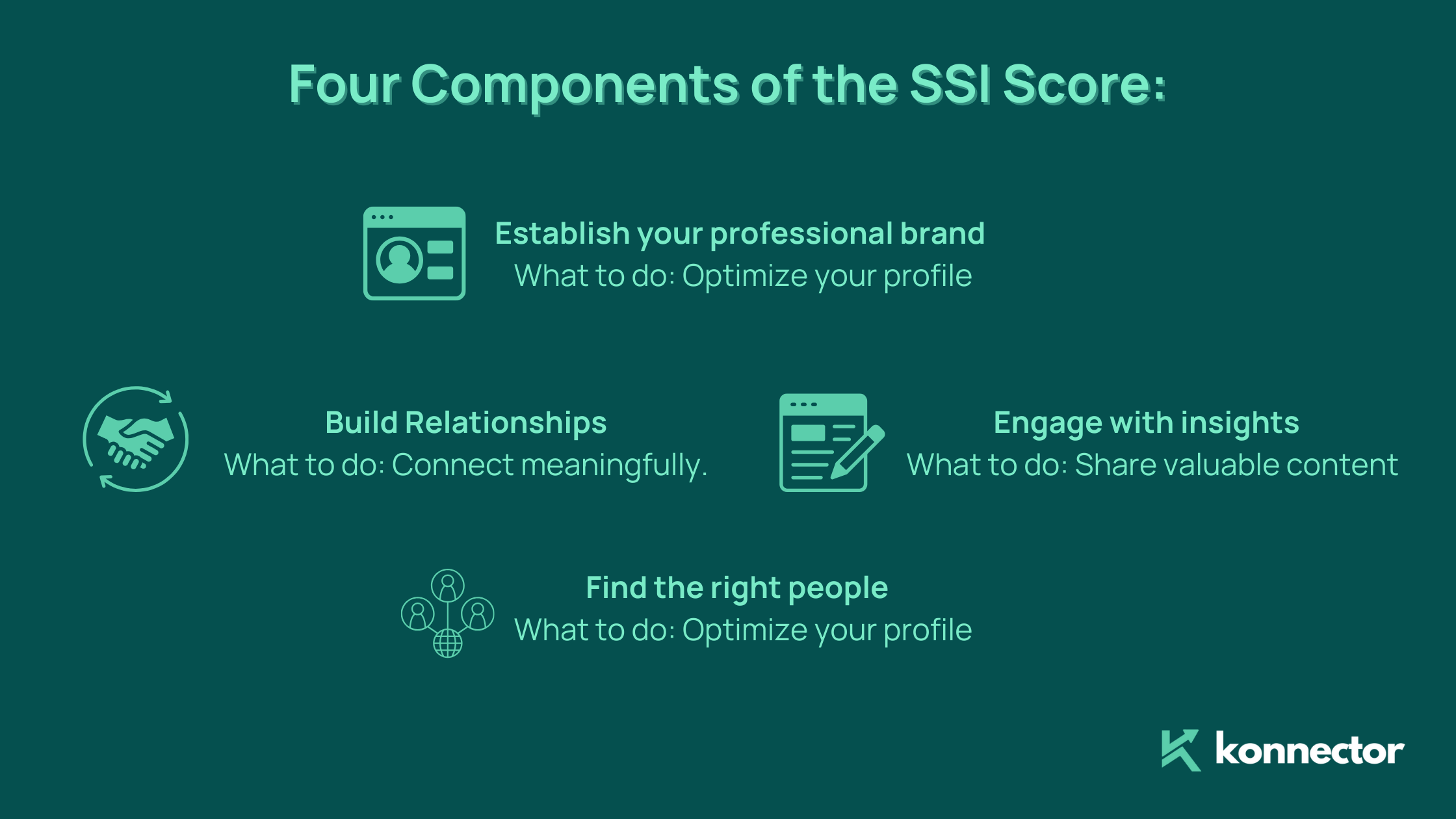
Your Social Selling Index (SSI) isn’t just a vanity metric anymore — it’s a behavioral buffer.
Accounts with healthy SSI scores (built through profile views, post engagement, and natural interactions) get significantly more leeway than accounts that only send outbound messages.
Low SSI + automation = fast track to restrictions.
Read more—-> How to Boost Your Social Selling Index (SSI) on LinkedIn?
Why Fixed Delays Are an Immediate Red Flag
LinkedIn doesn’t look for bots anymore. It looks for patterns.

Simple randomization isn’t enough. Your automation needs to demonstrate genuine behavioral realism — which is exactly what separates modern tools from outdated browser extensions. This
What Are the LinkedIn Daily Message Limits in the UK for 2026?
These are safe operating benchmarks, not targets to hit.
| Action Type | Free Account (Safe Daily Limit) | Sales Navigator (Safe Daily Limit) |
|---|---|---|
| Connection Requests | 10–15 per day | 30–45 per day |
| 1st Degree Messages | 50 per day | 120 per day |
| InMails (Paid) | N/A | Based on available credits |
| Smart Views/Likes | 20 per day | 50 per day |
The “Withdrawal Penalty” Most Teams Miss
Here’s something that catches people off guard: leaving 500+ pending connection requests signals poor targeting to LinkedIn’s algorithm.
When invites pile up unanswered, the platform starts classifying your account as spam-like — regardless of your message quality.
Smart automation includes regular cleanup of pending invitations. It’s a small detail that makes a massive difference to account health.
How to Use “Social Signal” Automation to Triple UK Reply Rates
The most effective LinkedIn automation in 2026 doesn’t start with a message — it starts with visibility.
The Modern Warm-Up Sequence
48 hours to 4 days before sending a connection request:
- View the prospect’s profile
- Like one or two recent posts
- Leave a few thoughtful comments on relevant industry discussions
This builds recognition without triggering resistance. By the time your connection request arrives, you’re already familiar.
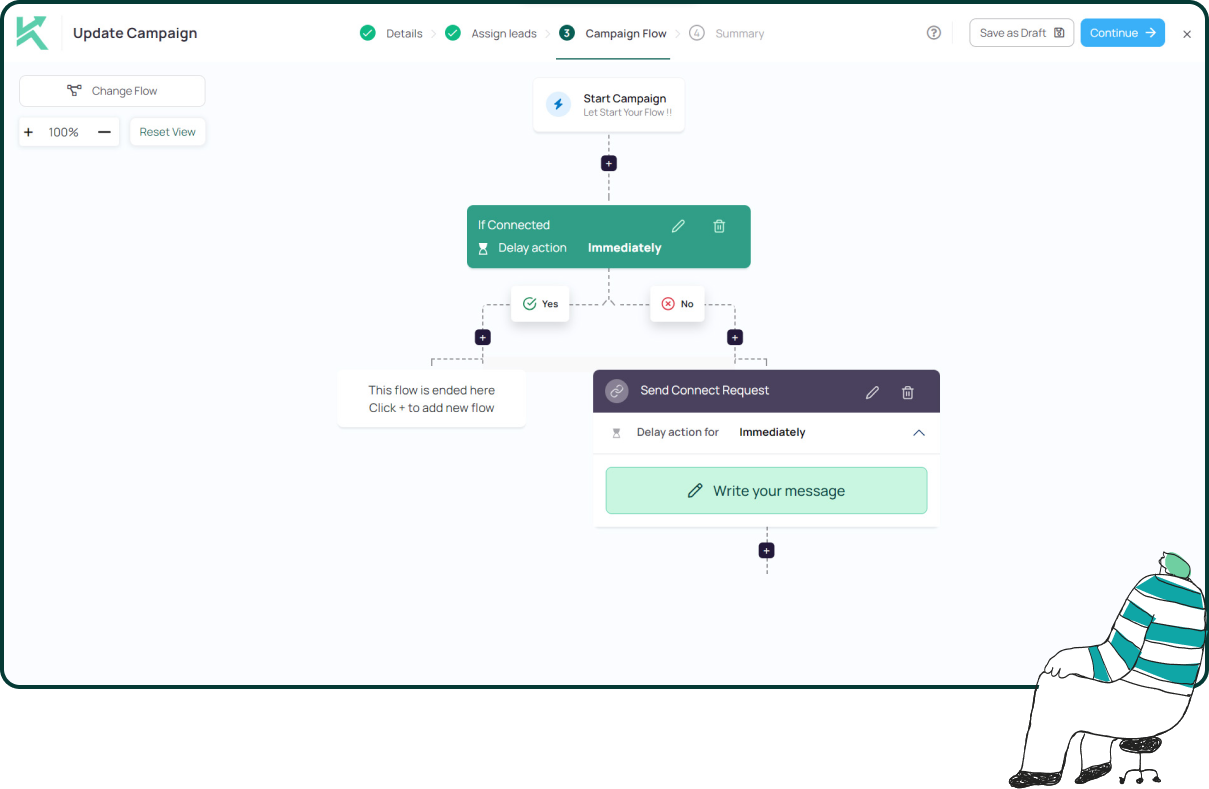
All of Konnector’s campaigns are thoughtfully curated keeping these signals in mind. Here is an example:

Intent-Based Triggers Outperform Cold Sequences
The best automation responds to signals, not static lists.
Examples:
- Prospect comments on a UK industry post → contextual follow-up message
- Prospect views your profile → soft connection request
- Repeated engagement over days → connection request without lengthy note
The Konnector.AI advantage: Rather than blasting through contact lists, it analyzes the context of a prospect’s recent activity before ever hitting “send.” This signal-driven approach is what separates modern automation from legacy tools.
UK GDPR and PECR Compliance in LinkedIn Automation
Let’s be clear: LinkedIn automation isn’t illegal in the UK. Misuse of personal data is.
| Generally Safe Practices | Higher-Risk Practices |
|---|---|
| B2B outreach using publicly available professional profile data | Scraping personal email addresses |
| Role-relevant communication under “legitimate interest” (GDPR) | Using non-professional data enrichment sources |
| Sales Navigator-based prospecting | Bulk data usage without clear business context |
Konnector.AI includes built-in compliance filters that prioritize Sales Navigator data and minimize unauthorized scraping — reducing legal risk for UK businesses by design.
Why Cloud-Based Tools Beat Browser Extensions in 2026
The DOM Injection Problem
Browser extensions work by modifying LinkedIn’s front-end code (called DOM injection). LinkedIn’s security systems now detect these changes far more reliably than they did even a year ago.
This is why extension-based tools face higher restriction rates — even when operating at low volumes.
The “Always-On” Advantage
Cloud-based automation like Konnector.AI:
- Operates during UK business hours (9 AM – 5 PM GMT) even when your laptop is off
- Runs independently of your local device and IP address
- Avoids fingerprint conflicts that trigger security flags
The result? Activity that looks consistently professional rather than mechanical or suspicious.
How to Personalize LinkedIn Outreach at Scale (Without Sounding Like a Bot)
Personalization in 2026 isn’t about writing three-paragraph AI-generated essays.
It’s about:
- Contextual relevance (mentioning a recent post, achievement, or shared connection)
- Short, natural language that feels human
- Knowing when to stop automation
The “Human-in-the-Loop” Model
The safest and most effective approach:
- Automate visibility and initial contact
- Pause automation the moment a prospect replies
- Hand the conversation over to a real human
This protects reply quality and long-term account health. Konnector.AI supports custom variables so you can insert specific details without relying on generic AI-generated messages.
Conclusion: Future-Proofing Your UK Lead Generation
In 2026, success on LinkedIn isn’t about sending the most messages — it’s about starting the most relevant conversations at the right moment.
Automation continues to work when it:
- Builds familiarity before outreach
- Responds to genuine intent signals
- Mirrors real professional behavior patterns
The algorithm now rewards quality over volume. Your outreach strategy needs to evolve accordingly.
Ready to see how social signal automation keeps your account safe and your pipeline full?

No hard sell — just a conversation about what actually works in 2026.
11x Your LinkedIn Outreach With
Automation and Gen AI
Harness the power of LinkedIn Automation and Gen AI to amplify your reach like never before. Engage thousands of leads weekly with AI-driven comments and targeted campaigns—all from one lead-gen powerhouse platform.
Frequently Asked Questions
Yes. LinkedIn automation is safe in 2026 when it mirrors real professional behaviour, uses conservative limits, and prioritises relevance over message volume.
LinkedIn does not ban accounts simply for using automation. Restrictions usually happen due to spam-like patterns, excessive activity, or unrealistic behaviour.
For UK accounts, 10–15 connection requests per day on free accounts and up to 30–45 per day with Sales Navigator are generally considered safe.
Yes. Cloud-based tools are typically safer than browser extensions because they avoid front-end code manipulation and reduce IP and device risks.
Yes. Sales Navigator improves relevance and trust signals, which helps reduce the risk of account restrictions when automating outreach.
Yes. LinkedIn can detect rotating or mismatched IP locations. Using static, location-matched proxies significantly reduces detection risk.
Relational velocity refers to how quickly trust and familiarity build between two users through profile views, engagement, and relevant interaction rather than message volume.
A proper warm-up includes profile views, post engagement, and light interaction over several days before sending connection requests or messages.
Yes. B2B LinkedIn automation is legal under GDPR when conducted under legitimate interest using professional data and clear business context.
Accumulating many unanswered connection requests signals low relevance and can lead to spam classification or temporary account restrictions.