The short answer: the best LinkedIn outreach strategy for B2B leads in 2026 is not the one that sends the most messages. It is the one that sends the right message, to the right person, at the right moment — and follows up consistently. LinkedIn generates 80% of all B2B social media leads and delivers InMail response rates of 10–25%, compared to 1–5% for cold email. The channel works. The playbook has changed.
Here is the exact strategy generating pipeline right now.

Step 1: Build a Precise ICP List — Not a Big One
List quality is the single largest driver of LinkedIn outreach performance. Define your Ideal Customer Profile with at least five criteria: job title, seniority level, company size, industry, and a buying signal (recent funding, job change, tech stack, content they engage with).
Use LinkedIn Sales Navigator to build targeted lists of 100–500 contacts. Narrower lists consistently outperform broad ones because every send has a higher relevance probability — and high acceptance rates protect and expand your account’s sending capacity over time. Poor targeting is the root cause of most failed outreach campaigns. See the full breakdown of why LinkedIn outreach fails — and how to fix it.
Step 2: Warm Up Before You Connect
Never send a cold connection request as your first touch. Engage with your prospect’s content first — a specific comment on a recent post, a profile visit, a like. Do this 24–48 hours before connecting. Comment-first outreach lifts connection acceptance rates from 20% to 45–60%.
When your request arrives, you are not a stranger. You are someone who has already added value to their conversation. That recognition is worth more than any message copy you can write.
⚡ Sign Up Free → Launch your first intent-based LinkedIn outreach sequence today.
Step 3: Send a Personalised, Pitch-Free Connection Request
Include a short note referencing something specific — a post they wrote, a company milestone, a shared group. Never pitch in the connection request. Keep it under 300 characters on Premium or Sales Navigator.
The data is unambiguous: personalised connection requests achieve a 55% higher acceptance rate than generic ones. After acceptance, wait 1–3 days before your first message. Do not send a calendar link or a product pitch. Open a conversation — a relevant insight, a question, a useful resource with no strings attached.
📅 Book a Free Demo → We’ll audit your current LinkedIn outreach and build a custom strategy for your ICP on the call.
Step 4: Run a Multi-Touch Follow-Up Sequence
Most LinkedIn outreach campaigns abandon prospects after one message — leaving 42% of all potential replies uncaptured. Build a 3–4 touch sequence over 10–14 days:
- Message 1 (day 1–3): Value-first opener. No pitch.
- Message 2 (day 5–7): New angle or soft nudge. Brief and human.
- Message 3 (day 9–11): Specific case study or data point relevant to their role.
- Message 4 (day 13–15): Clear, low-pressure CTA: “Worth a 15-minute call?”
Value-first sequences generate 15–25% response rates, compared to 2–5% for immediate pitches. Timing matters too — Tuesday to Thursday, 9–11 AM in your prospect’s local timezone, consistently produces the highest reply rates.
Step 5: Stay Within Safe Limits and Monitor Performance
Send 20–40 connection requests and 50–100 messages per day. Exceeding these thresholds triggers LinkedIn’s Volume Tax — an algorithmic penalty that routes your messages to the “Other” inbox and suppresses your profile visibility. Here is exactly how many LinkedIn outreach messages you can send per day safely.
Track weekly: connection acceptance rate (target 30–45%), reply rate (target 10–15%), and your SSI score at linkedin.com/sales/ssi. If acceptance rate drops below 20%, stop sending and fix the targeting before resuming.
Run This Strategy at Scale with Konnector.ai
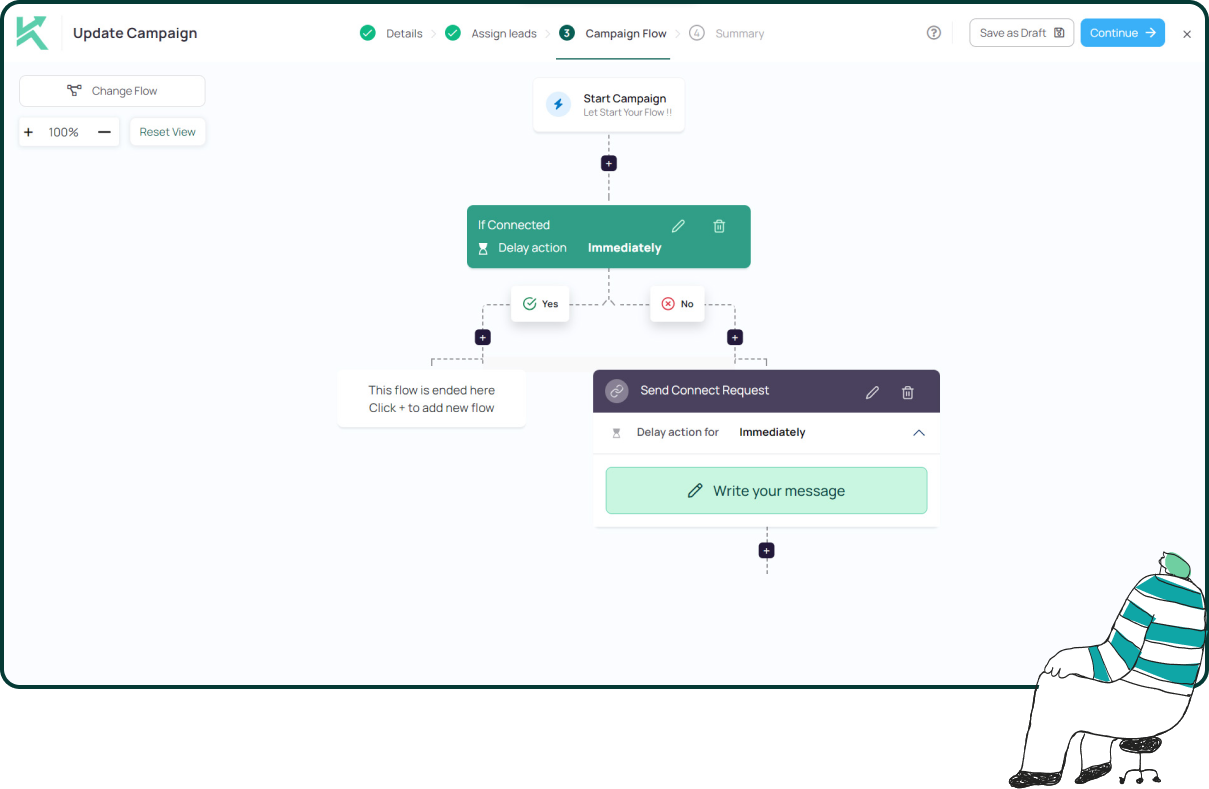
Konnector.ai automates the full sequence — ICP targeting, warm-up engagement, personalised connection requests, follow-up messages, and real-time acceptance rate monitoring — while keeping your account safely within LinkedIn’s limits. Every public-facing action requires your approval. No ghost profiles. No headless browsers. No burned accounts.
11x Your LinkedIn Outreach With
Automation and Gen AI
Harness the power of LinkedIn Automation and Gen AI to amplify your reach like never before. Engage thousands of leads weekly with AI-driven comments and targeted campaigns—all from one lead-gen powerhouse platform.
Frequently Asked Questions
The most common causes: generic messaging, poor ICP targeting, pitching in the first message, no follow-up sequence, or triggering the Volume Tax.
Tuesday to Thursday, 9–11 AM in your prospect’s local timezone. Tuesday has the highest reply rate at 6.90% based on analysis of 20 million+ outreach attempts. Avoid Saturday sends entirely.
30–45% is good. Below 20% means your targeting or profile needs fixing before you scale volume. Personalised, contextual connection requests achieve a 55% higher acceptance rate than generic ones.
20–40 connection requests per day and 50–100 direct messages to existing connections per day. Exceeding these thresholds triggers LinkedIn’s spam detection and Volume Tax penalty.
The best strategy combines four steps: build a precise ICP list using Sales Navigator, warm up prospects by engaging with their content before connecting, send a personalised pitch-free connection request followed by a value-first 3–4 touch sequence, and stay within safe daily limits (20–40 requests, 50–100 messages per day). Track acceptance rate and reply rate weekly to catch problems before they compound.