Here is the situation most B2B sales teams are stuck in right now.
They have a list. They have a sequence. They have a tool that sends connection requests and follow-ups on a schedule. And their reply rates are somewhere between embarrassing and catastrophic — because 79% of B2B decision-makers now actively ignore cold direct messages.
The message is not the problem. The timing is. The targeting is. And above all — the absence of a signal is.
The teams generating consistent pipeline from LinkedIn in 2026 are not the ones sending the most messages. They are the ones who have learned to read what their prospects are already telling them — publicly, daily, right there in the feed — before they ever reach out. They are acting on social intent signals. And if you do not have a system for capturing them, you are prospecting blind.
This is everything you need to know about what they are, why they matter more than ever, and exactly how to use them.
What Is a Social Intent Signal?
A social intent signal is a visible behavioural action a prospect takes on LinkedIn that reveals awareness, interest, or active consideration of a problem your product solves.
It is not a demographic. It is not a firmographic filter. It is not a job title on a scraped list. It is a real person, in real time, doing something that tells you — if you are paying attention — that now is a meaningful moment to reach out.
Think of it this way. Cold outreach is a guess. You are pointing at someone who fits a profile and hoping the timing is right. A social intent signal removes the guesswork. The buyer is not just a good fit on paper — they are actively signalling that they care about something relevant to what you offer.
The difference between a conversation that starts and one that gets ignored often comes down entirely to that signal.
“Social signals are the digital breadcrumbs buyers leave before they ever fill out a form or talk to sales. The teams that win now are the ones who find those breadcrumbs first — and follow them.”
Why Social Intent Signals Matter More Now:
Two things happened simultaneously that made this the most important lever in LinkedIn outreach.
First: LinkedIn changed its algorithm. In late 2024 and through 2025, LinkedIn rebuilt its entire content ranking infrastructure around an AI model called 360Brew. It suppressed engagement pods, automated comments, and low-quality interaction. What survived is more intentional. When someone likes your post or comments on your content in 2026, that action carries significantly more weight than the same action carried in 2024. The noise was filtered out. What remains is signal.
Second: Cold outreach stopped working at scale. Not because outreach is dead — it is not. But because buyers are now expert-level at identifying and dismissing templated, contextless messages. The only outreach that reliably generates replies is outreach that arrives at the right moment, with a reason that is clearly grounded in something real. A social intent signal gives you that reason. It tells you the moment. It gives you the context.
Research across 152 B2B workspaces and 299,690 LinkedIn interactions found that roughly 84% of all LinkedIn engagement is noise — content from people who will never buy from you. Only 15.6% matches a team’s ICP criteria. The game is not to generate more engagement. The game is to identify and act on the 15.6% that is real, before your competition does.
The Six Types of Social Intent Signals on LinkedIn:

Not all signals are equal. Some tell you a buyer is curious. Some tell you they are actively evaluating. Some tell you they are in-market right now. Here is how to read each one.
1. The Tool Recommendation Post
A decision-maker in your ICP publicly asks: “What CRM does your team use for outbound?” or “Looking for a LinkedIn automation tool that does not get us banned — recommendations?”
This is the highest-intent signal available on LinkedIn. The person is not browsing. They are not exploring. They are actively in the market, publicly soliciting vendor input, and open to a conversation. The moment this post appears in your feed, the clock is ticking — because every other salesperson who tracks the right keywords is about to see it too.
The correct move: engage with a genuinely useful comment in the thread first. Then send a connection request referencing the post. Then — and only then — a short, specific DM that continues the conversation without pitching. You are not interrupting. You are answering.
2. Repeated Content Engagement
Someone likes three of your posts. Then comments on a fourth. Then saves one.
This is a warm lead who has self-selected into your orbit without you asking them to. They have encountered your thinking repeatedly and chosen to engage each time. That is not a coincidence. It is a signal of sustained, genuine interest.
The critical mistake most teams make: LinkedIn tells you “142 people viewed your post” — but it does not tell you which 22 of them are VPs of Sales at companies in your target market. That filtering is the system you need to build. When you do, the repeat engager becomes one of your warmest possible outreach targets. You are not cold to them. They have been watching you for weeks.
3. Profile View from an ICP Match
A Director of Revenue Operations at a Series B SaaS company visited your profile.
They did not stumble there. On LinkedIn in 2026, a profile visit is deliberate. They saw something — your content, a comment you left, a mention from a colleague — and chose to find out more about you. This is the clearest possible signal that you are already on their radar.
The correct move is not to immediately pitch them. It is to visit their profile in return (which generates a notification), engage with a recent post, and then send a connection request that references the context — not the fact that you saw them looking. The conversation starts from a position of mutual recognition, not cold contact.
4. Job Change at a Target Account
A new VP of Marketing just joined a company in your ICP. Or your champion at an existing prospect just moved to a new company — taking their problem, their budget authority, and their existing knowledge of your space with them.
Job changes are one of the most reliable triggers in B2B sales. A new leader entering a role is evaluating everything: existing tools, vendors, processes, team structure. They are in the market by default, even if they do not know it yet. The window of opportunity is the first 30–90 days — before they have inherited the status quo and before competitors have found them.
LinkedIn Sales Navigator surfaces these alerts automatically. The teams that act within 48 hours of a job change signal consistently convert at higher rates than those who wait for the prospect to come to them.
5. Posts About Business Challenges Your Product Solves
A founder posts about struggling to scale outbound without getting their LinkedIn account restricted. A RevOps leader writes about pipeline quality dropping as outreach volume increases. A CMO asks their network why LinkedIn replies have fallen off a cliff despite sending more messages than ever.
They are describing the exact problem you solve. They are not asking for a vendor yet — but they are actively thinking about the category. This is medium-to-high intent, and it is a golden opportunity to enter the conversation as a peer, not a salesperson.
Leave a comment that adds genuine insight — not a product mention, not a link, not a “Great post!” A response that demonstrates you understand the problem at a level that makes them think you might actually know how to solve it. That comment becomes the context for your connection request. The subsequent DM is not cold. It is a continuation.
6. Engagement with Competitor or Category Content
A prospect is actively liking, commenting on, or sharing posts from your competitors or from analysts covering your category. They are researching. They are forming a shortlist. They have not raised their hand yet — but their behaviour is telling you they are in the evaluation phase.
This is where social intent data intersects with traditional intent data. A prospect who is engaging with your competitors’ LinkedIn content while also visiting comparison pages on G2 is about as clear an in-market signal as you will get before they fill out a form. The right response is content that demonstrates a clear and specific differentiation — not a pitch, but a perspective that makes them curious enough to start a conversation.
The System Problem Most Teams Have
Reading this, you might be thinking: I already see some of these signals. I check my notifications. I notice when someone relevant engages.
That is not a system. That is hope.
The average B2B sales rep catches maybe 10–15% of the signals that come through their own content and their team’s content — because they are doing it manually, inconsistently, and without any ICP filter applied. They see a notification. They check if the person seems relevant. They either remember to follow up or they do not.
The companies winning on LinkedIn in 2026 have a different architecture entirely:

- Signal capture: Tracking engagement across the whole team’s content, not just one profile, in real time
- ICP qualification: Automatically filtering which engagements match their ideal customer criteria — seniority, company size, industry, geography
- Signal classification: Ranking signals by intent level — a tool recommendation post is Tier 1, a job change is Tier 2, a post like is Tier 3 — and determining the right outreach motion for each
- Warm-up before contact: Using profile views, post likes, and contextual comments to build familiarity before a connection request is ever sent
- Timed, contextual outreach: Reaching out within hours of a high-intent signal, with a message that references what the prospect actually did or said
This is exactly what Konnector.ai’s Social Signals Intelligence is built to do. It monitors your tracked keywords and ICP-relevant content in real time, surfaces the signals that matter, and lets you act on them — whether you approve AI-drafted comments to build visibility first, or move directly to a personalised connection request the moment a high-intent signal appears.
The result is outreach that does not feel like outreach. It feels like a timely, relevant conversation — because it is.
“Intent data tells you who might buy. Social intent signals tell you who is already thinking about it — and gives you the context to start a conversation that feels human.”
Signal-Based Outreach vs. List-Based Outreach: The Numbers
| Metric | List-Based Cold Outreach | Signal-Based Outreach |
|---|---|---|
| Connection acceptance rate | 20–25% | 45–60% |
| First-message reply rate | 2–5% | 15–25% |
| Inbound lead conversion rate | 1.7% | 14.6% |
| ICP match rate on engagements | 13.1% (unfiltered) | 61% (structured signal capture) |
| Win rate vs. traditional prospecting | Baseline | 42% higher |
| Sales cycle length | Baseline | 27% shorter |
These numbers are not aspirational. They reflect what happens when outreach is timed to intent rather than sent at volume. The mechanism is simple: when someone is already thinking about the problem you solve, the conversation they are willing to have is completely different from the one they have with a cold stranger.
What Signal-Based Outreach Actually Looks Like in Practice
Let us make this concrete. Here is the same situation handled two ways.
List-based approach: A VP of Sales at a 200-person SaaS company appears on your prospecting list. You send a connection request. It says: “Hi Sarah, I’d love to connect and share how we help sales teams like yours with LinkedIn outreach.” She ignores it, because she has received 12 identical messages this week.
Signal-based approach: Sarah posts: “Our LinkedIn outreach reply rates have dropped 40% this year. Trying to figure out if it’s the messaging, the timing, or the tool. Anyone else seeing this?”
You leave a comment: “The reply rate drop is almost always a signal quality problem, not a volume problem. Most teams are still sending to lists instead of signals — which means they’re reaching people regardless of whether the timing is right. Happy to share the framework we use to identify which contacts are actually thinking about the problem right now.”
Three days later, your connection request arrives: “Hi Sarah, left a comment on your post about declining reply rates — it’s a pattern we see a lot. Thought it would be worth connecting.”
She accepts. Because you were already part of the conversation she started. You answered something she was genuinely thinking about. You did not interrupt — you arrived.
How Konnector.ai Turns Social Signals into Pipeline
Most sales teams cannot run this system manually at any meaningful scale. Tracking signals across your entire team’s content, filtering by ICP, classifying by intent level, warming up before connecting, and acting within hours — that is a full-time job multiplied across every rep, every campaign, every day.
Konnector.ai automates the infrastructure layer so your team can focus on the conversations.
- Social Signals Intelligence dashboard surfaces high-intent activity from your ICP in real time — posts about challenges you solve, keyword conversations gaining traction, and engagement from target accounts across your team’s content
- AI Comment Engine drafts contextual, human-sounding responses to high-value posts for your approval — so you show up in the right conversations before reaching out directly
- Intent-triggered outreach sequences activate automatically when a signal meets your ICP threshold — profile view, post engagement, job change — with personalised messages that reference the specific signal
- Human-in-the-loop control at every public-facing step — your team approves, edits, or skips. The intelligence is automated. The voice is always yours.
The result: your outreach does not feel like outreach. It feels like a well-timed, relevant conversation — because it is grounded in something the buyer was already doing.
📅 Book a Free Demo → See Konnector.ai’s Social Signals Intelligence in action and find out which signals your team is currently missing.
⚡ Sign Up Free → Start capturing and acting on LinkedIn intent signals today.

Further Reading
- Tracking Social Signals in 2026: The LinkedIn Outreach Playbook for Sales Teams
- Why LinkedIn Outreach Fails — And How to Fix It in 2026
- What Is the Best LinkedIn Outreach Strategy for B2B Leads?
- How Does LinkedIn Outreach Work in 2026? (Step-by-Step Strategy Guide)
- Daily LinkedIn Routine for Founders Using Konnector AI
- Best Time to Schedule LinkedIn Outreach Messages
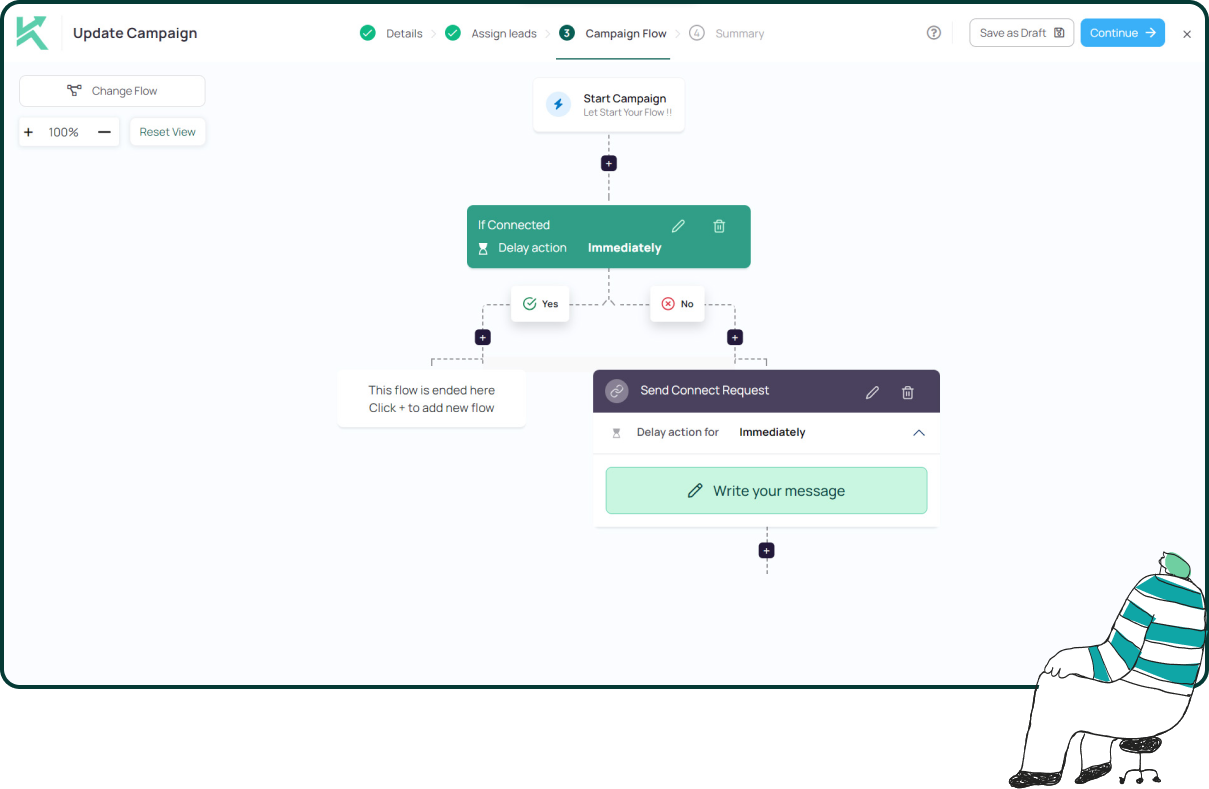
11x Your LinkedIn Outreach With
Automation and Gen AI
Harness the power of LinkedIn Automation and Gen AI to amplify your reach like never before. Engage thousands of leads weekly with AI-driven comments and targeted campaigns—all from one lead-gen powerhouse platform.
Frequently Asked Questions
High-intent signals indicate active buying behaviour — such as asking for recommendations, comparing tools, or engaging deeply with category content. Low-intent signals include passive actions like a single like or a generic connection. The difference lies in frequency, context, and specificity of action.
High-intent signals should be acted on within a few hours, not days. Timing is critical because the context is fresh and the prospect is actively thinking about the problem. Delayed outreach significantly reduces response probability.
Not entirely — but they significantly reduce reliance on cold outreach. The most effective strategy combines signal-based outreach for high-quality conversations and light cold outreach for pipeline volume.
Manually, you can monitor:
Post engagement (likes, comments)
Profile views
Group activity
Event participation
At scale, tools like Konnector automate signal detection across multiple sources and prioritise leads based on engagement patterns.
The biggest mistake is pitching too early. Referencing a signal and immediately selling destroys the advantage. The first goal is to start a conversation — not close a deal.
Profile views are a moderate-intent signal, especially when they come from ICP-matched prospects. On their own, they are weak — but when combined with other signals (like engagement), they become significantly more valuable.
Reference the exact action:
“Saw your comment on [topic]…”
“Noticed you were exploring [problem]…”
Then add relevance — why it matters — without pitching. Personalisation should feel observational, not scripted.
You don’t need multiple signals for high-intent actions (like asking for recommendations). For lower-intent signals, wait for signal stacking — multiple interactions over time — before initiating outreach.
They work best in B2B, SaaS, consulting, and service-based industries where buyers actively research and engage publicly. In highly niche or offline-driven industries, signal volume may be lower.
Content is the engine that creates signals. Without consistent posting and engagement, there are no signals to act on. High-quality content attracts the right audience and surfaces intent naturally.