Let’s start by understanding what slow outreach actually means.
Slow outreach means sending fewer, more relevant LinkedIn messages instead of relying on mass, generic outreach. The goal isn’t activity—it’s conversations that lead somewhere.
How slow outreach differs from traditional LinkedIn automation
Traditional LinkedIn automation is built around volume.
More messages. More sequences. More noise.
Slow outreach flips the model.
Instead of optimizing for how many messages go out, it prioritizes relevance, timing, and context.
Rather than blasting 100 people with the same message, you focus on 20 people who already have a reason to engage.
Why sales teams are shifting to this model?
Buyers today are more informed, cautious, and selective—and LinkedIn behavior reflects that clearly.
More informed: Buyers rarely discover solutions through cold messages anymore. They research quietly by reading posts, checking profiles, and observing conversations. By the time a message lands, they already know if it’s relevant.
More cautious: Years of spammy automation have made templated outreach easy to spot. Messages that feel rushed or overly sales-driven get ignored, even when the offer is solid.
More selective: Attention on LinkedIn is limited. Buyers engage only with messages that respect their time and feel purposeful.
That’s why modern sales teams aren’t trying to out-message the market.
They’re focusing on fewer, better conversations instead of broadcasting to everyone.

Still chasing volume?
Start building quality outreach with Konnector.
Book a demo today!
Why High-Volume Outreach Fails on LinkedIn?
High-volume outreach fails because it prioritizes activity over relevance. Instead of starting conversations, it creates friction, distrust, and long-term risk.
Inbox fatigue: Decision-makers receive dozens of similar LinkedIn messages every week. When messages look repetitive, the brain filters them out instantly.
Spam filters and the “Other” inbox: Pattern-based automation triggers LinkedIn’s protective systems. Messages get deprioritized or routed to the Other inbox, reducing visibility.
Low trust in generic messages: Messages that could be sent to anyone don’t feel intentional. Without trust at the first touchpoint, replies rarely follow.
Account risk from over-automation: Aggressive automation increases the risk of warnings, restrictions, or bans. Volume-first strategies trade short-term activity for long-term access.

Why 20 High-Quality Messages Get More Replies Than 100 Spams
High-quality outreach works because it matches how people actually engage on LinkedIn. Replies come from recognition, relevance, and timing—not volume.
Familiarity beats volume: People reply more often when they recognize your name. Engagement before messaging creates that familiarity naturally.
Relevance drives responses: When a message clearly connects to someone’s role, industry, or recent activity, replying feels easy.
Conversations beat broadcasts: Sales happens through dialogue. High-quality outreach invites a response instead of pushing a pitch.
Quality improves close rates: Better replies lead to better meetings—and better meetings lead to better deals.
Want more replies with fewer messages?
Konnector helps you focus on quality, not noise.
What Makes a LinkedIn Message “High-Quality”?
A high-quality LinkedIn message feels timely, relevant, and human. It relies on context—not tricks or excessive personalization.
Two effective personalization approaches:
Option 1: Signal-based personalization (best-performing method):
This approach uses visible intent signals instead of assumptions, making outreach feel timely and natural.
Examples include:

Option 2: Research-based personalization:
This approach uses professional context such as role, industry, or company milestones.
Examples include:

The key is restraint. One clear, relevant reference is enough to start a conversation.
How Konnector Supports Slow Outreach
Konnector is designed to help teams execute slow outreach at scale—without losing relevance or control.
#1 Signal-based outreach, ranked by potency:
Konnector prioritizes outreach using real LinkedIn intent signals, so teams always start with the warmest leads.
- Posts published as intent signals
- Post likers and commenters
- LinkedIn events leads
- LinkedIn group leads
- Profile viewers
- New followers
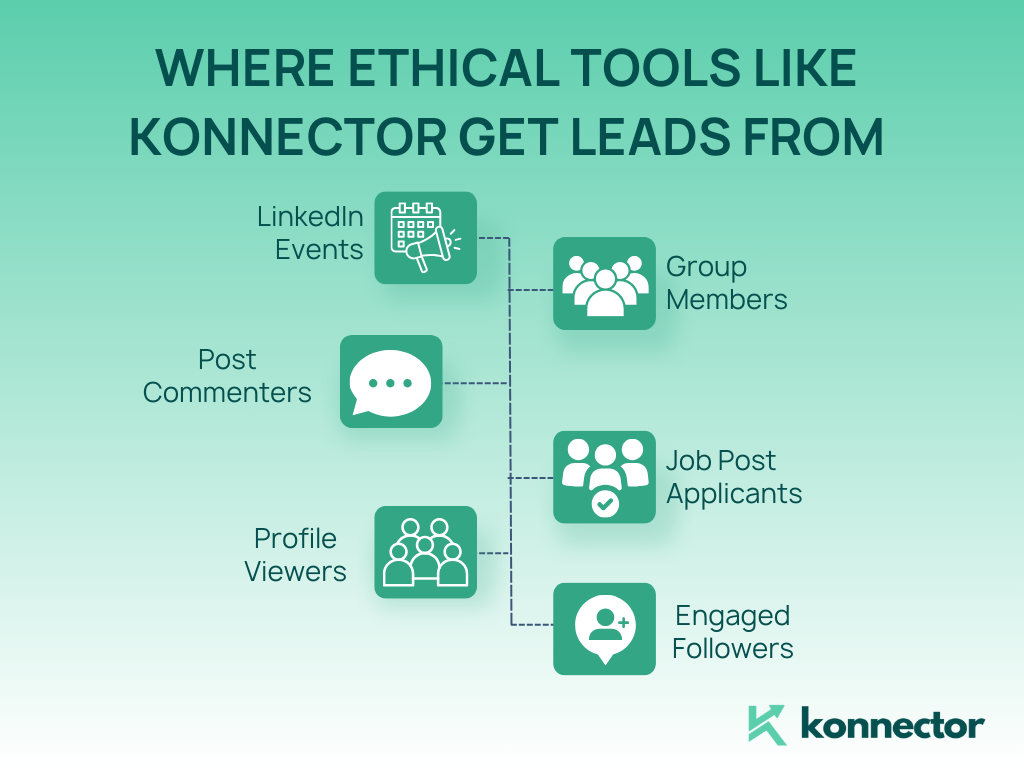
This ensures outreach begins with visible intent, not cold guesses.
#2 Building social capital before messaging:
Konnector helps teams build familiarity before outreach through:
- Automated profile views
- Smart likes
- AI-generated, human-style comments
- Consistent engagement before messaging

From engagement to messaging:
Once visibility is established, Konnector supports:
- Warm-up based message sequencing
- Short, relevant outreach messages
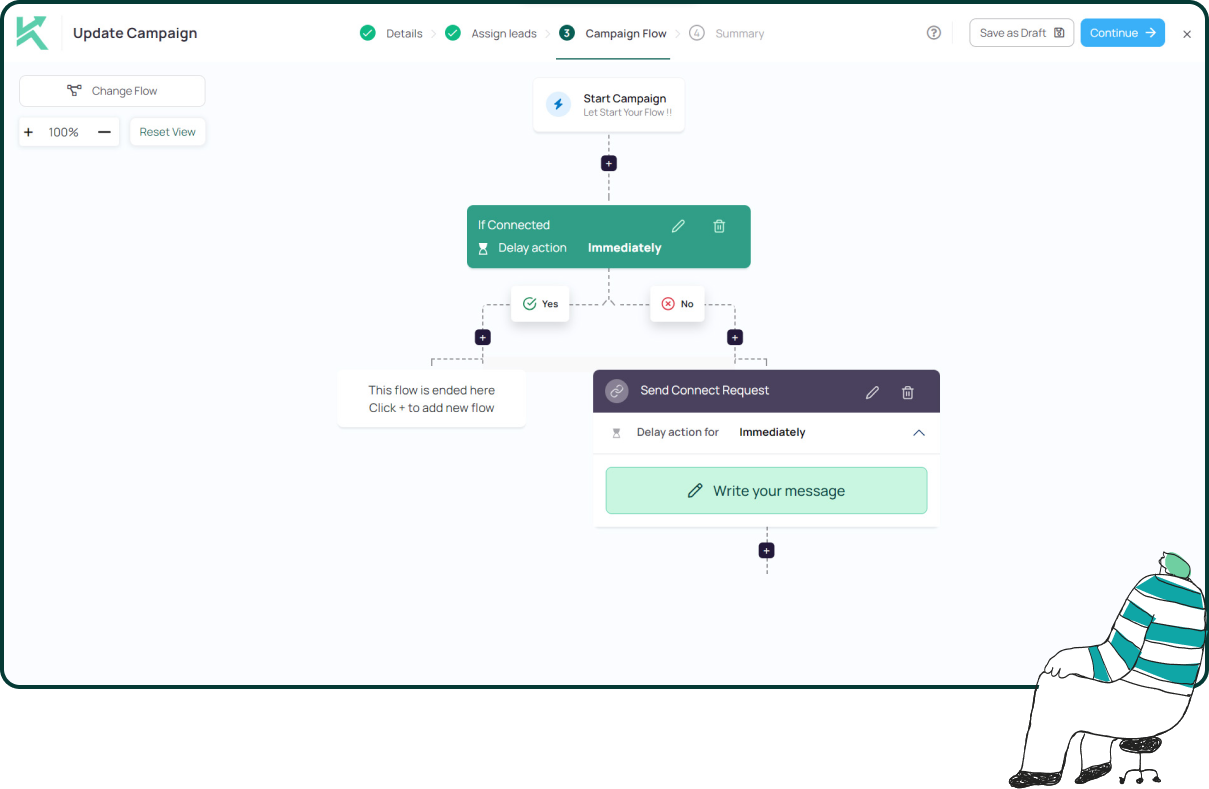
Slow Outreach Flow for Sales Teams
A slow outreach flow focuses on timing and relevance rather than speed.
Step 1: Choose quality leads using signals and filters
Step 2: Engage with their content
Step 3: Let them notice you
Step 4: Send a short, relevant message
Step 5: Follow up with value, not pressure
Build this flow in minutes using Konnector.
Sign up today.
How Slow Outreach Improves Sales Results
Slow outreach aligns with buyer behavior and produces stronger outcomes like higher reply rates , better-quality meetings , lower account risk and stronger brand perception…
Stop sending 100 messages that get ignored.
Start sending 20 that start conversations.
Use Konnector to automate smart engagement, warm your leads, and turn LinkedIn outreach into a predictable sales system.
11x Your LinkedIn Outreach With
Automation and Gen AI
Harness the power of LinkedIn Automation and Gen AI to amplify your reach like never before. Engage thousands of leads weekly with AI-driven comments and targeted campaigns—all from one lead-gen powerhouse platform.
Frequently Asked Questions
Slow outreach on LinkedIn means sending fewer, more relevant messages based on context or intent signals instead of mass, generic outreach. The goal is to start conversations, not maximize message volume.
Yes. Slow outreach often works better because it focuses on relevance, timing, and familiarity. High-volume LinkedIn automation may increase activity, but slow outreach typically delivers higher reply rates and better-quality conversations.
High-volume LinkedIn outreach fails due to inbox fatigue, spam filters, low trust in generic messages, and increased account risk. Buyers ignore repetitive messages that feel automated or impersonal.
A high-quality LinkedIn outreach message is short, relevant, and based on visible professional context such as role, industry, or recent activity. It avoids hard selling and focuses on starting a conversation.
Yes. Personalization increases reply rates when it is relevant and timely. Messages personalized using role-based context or intent signals perform better than generic outreach.
Signal-based LinkedIn outreach uses visible intent signals—such as post engagement, profile views, event participation, or new followers—to decide who to message and when. This makes outreach feel timely and natural.
LinkedIn automation can be risky if it relies on high-volume, repetitive behavior. Over-automation may lead to warnings, restrictions, or account bans. Low-volume, human-like activity reduces this risk.
There is no fixed number, but most successful sales teams send fewer, higher-quality messages per day. Sending 10–20 relevant messages often performs better than sending 100 generic ones.
Yes. Engaging with a prospect’s content before messaging—such as liking or commenting—builds familiarity and trust. This significantly increases the likelihood of a response.