First off, what is LinkedIn Jail?
LinkedIn Jail is what happens when LinkedIn temporarily restricts your account due to suspicious activity. You may lose access to messaging, connection requests, profile views — or worse, your entire account.
And here’s the hard truth:
It’s not random.
LinkedIn’s detection systems are smarter than ever. If your activity looks automated, spammy, unnatural, or engagement-manipulated — you will get flagged.
But here’s the good news:
You can use LinkedIn Automation safely. You just need to understand how LinkedIn thinks.
Let’s break it down properly.
Read more—-> 30+ LinkedIn Hacks for 2026
What LinkedIn Actually Flags:
LinkedIn’s goal is simple: protect the platform from spam, bots, and fake engagement.
Its system evaluates behavioral signals — not just single actions.
Speed of Activity
LinkedIn measures how quickly actions happen.
- Rapid connection bursts
- Mass profile scanning
- Back-to-back messaging without pauses
Humans behave inconsistently.
Bots behave efficiently.
That difference matters.
Speed is the easiest red flag.
IP Reputation & Login Patterns
Your IP address signals location, device stability, and infrastructure type.
LinkedIn evaluates:
- VPN or datacenter IP ranges
- Multiple-country logins within short timeframes
- Shared automation infrastructure signals
Sudden environmental shifts trigger review.
Consistency builds trust.
Message Pattern Similarity
LinkedIn analyzes linguistic patterns at scale.
If your outreach resembles templated mass messaging across accounts, it creates a spam fingerprint.
Surface-level personalization doesn’t prevent detection.
Contextual relevance does.
Engagement Authenticity
Artificial engagement patterns stand out:
- Clustered likes
- Synchronized comments
- Sudden off-platform traffic bursts
Organic growth builds gradually.
Manipulated growth spikes unnaturally.
Behavioral Deviations
LinkedIn builds a baseline profile for your account.
Sudden jumps in activity volume, frequency, or timing create anomalies.
Scaling too aggressively is often what triggers restriction — not automation itself.
Read more—-> Is LinkedIn Automation Safe in 2026?

5 Triggers That Land You in LinkedIn Jail
These are practical mistakes — not system explanations.
Aggressive Profile Viewing
Scanning hundreds of profiles quickly creates automation-like footprints.
Copy-Paste DM Blasts
Sending identical messages at scale signals spam behavior instantly.
Coordinated Engagement Pods
Forcing likes via WhatsApp groups or pods creates detectable engagement clusters.
Risky Browser Extensions
Tools that operate directly from your local IP and execute actions rapidly increase detection risk.
Sudden Activity Bursts
Jumping from light activity to heavy outreach overnight looks unnatural.
Humans scale gradually.
Automation spikes instantly.
That’s the difference.

How to Use LinkedIn Automation Safely
This is where most advice gets vague.
Here’s what actually works.
Use Cloud-Based LinkedIn Automation
Platforms like Konnector.ai operate with controlled pacing, stable infrastructure, and built-in activity limits.
The objective isn’t speed.
It’s sustainability.
Prioritize Intent Over Volume
Intent-based targeting reduces spam complaints and increases reply rates.
Reaching out to users already engaging with relevant topics creates natural conversation entry points.
Scale Gradually
- Connection requests: 15–25 per day (warm accounts)
- Messages: 30–40 per day
- New accounts: start significantly lower
Warm-up is protection.
Make Personalization Meaningful
Reference:
- Recent posts
- Industry updates
- Hiring announcements
- Shared interests
Automation should assist thinking — not replace it.
Avoid Short-Term Growth Hacks
Engagement pods and artificial boosts might create vanity metrics.
They also increase restriction probability.
Build slowly.
Build real.
Build consistently.
What Happens If You Get Restricted?
Temporary actions may include:
- Messaging disabled
- Connection requests blocked
- Identity verification prompts
- Full account suspension
Repeated violations escalate consequences.
Recovery is possible.
Reputation repair is harder.
The Real Strategy: Sustainable LinkedIn Automation
LinkedIn Automation is not the problem.
Irresponsible execution is.
Safe scaling combines:
- Stable cloud infrastructure
- Intent-driven targeting
- Human oversight where needed
- Gradual volume increases
- CRM-integrated follow-up
That’s how professional sales teams operate in 2026.

Final Word: Play the Long Game
If your outreach strategy wouldn’t survive a manual LinkedIn review — rethink it.
LinkedIn Jail isn’t random.
It’s behavioral.
Use LinkedIn Automation intelligently.
And restriction risk drops dramatically.
Ready to Scale Without Fear?
If you’re serious about LinkedIn Automation, you need infrastructure built for compliance — not shortcuts.
Konnector.ai combines cloud-based delivery, intent-driven targeting, AI-assisted engagement, and CRM integration so you grow conversations without risking restrictions.
Because safe growth isn’t optional.
It’s strategy.
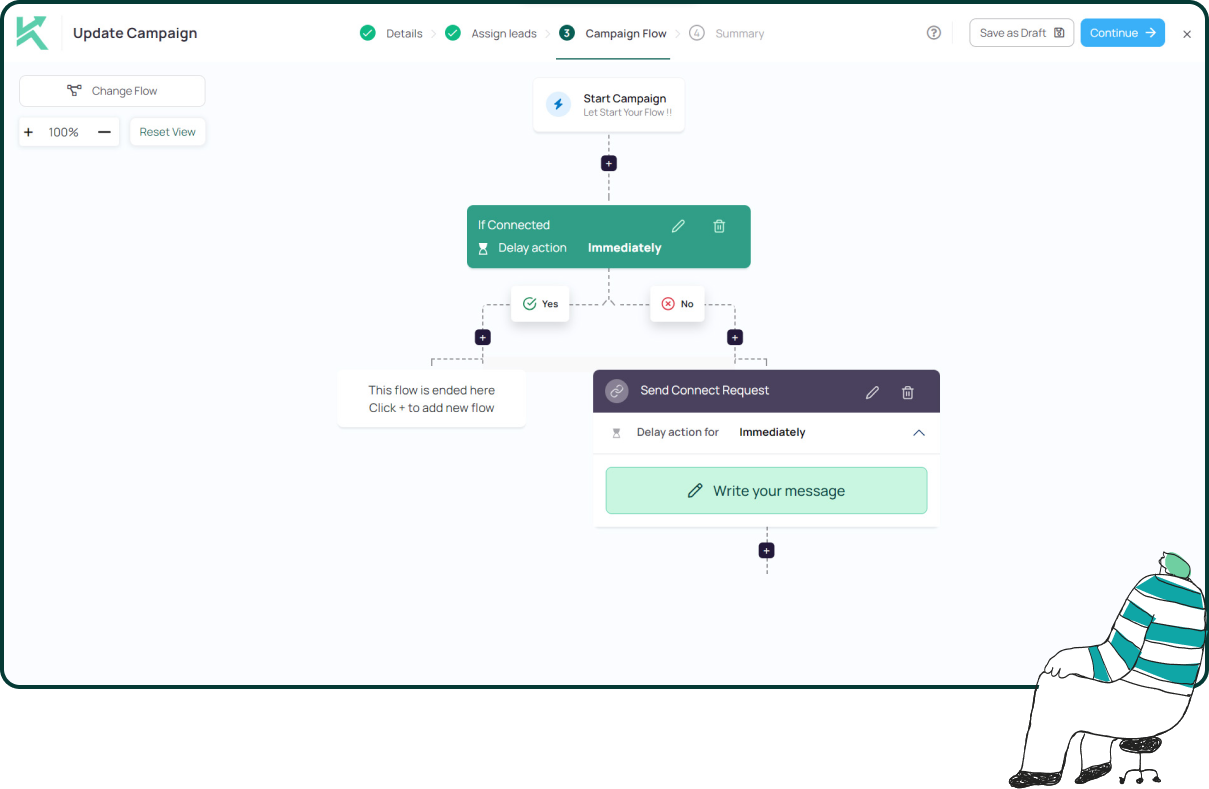
11x Your LinkedIn Outreach With
Automation and Gen AI
Harness the power of LinkedIn Automation and Gen AI to amplify your reach like never before. Engage thousands of leads weekly with AI-driven comments and targeted campaigns—all from one lead-gen powerhouse platform.
Frequently Asked Questions
LinkedIn Jail refers to a temporary restriction placed on your account due to suspicious or spam-like activity. This can limit your ability to send messages, connection requests, or even access your account entirely.
LinkedIn Automation is not illegal, but misuse can trigger restrictions. Safe automation that mimics human behavior, respects daily limits, and avoids spam patterns can operate sustainably.
LinkedIn restricts accounts to protect users from spam, bots, fake engagement, and automated abuse. Their system monitors activity speed, IP patterns, messaging similarity, and behavioral consistency.
For warm accounts, 15–25 connection requests per day is generally considered safe. New accounts should start much lower and gradually increase activity.
Yes. LinkedIn can detect suspicious activity patterns, browser extensions, datacenter IP ranges, and unnatural behavior bursts. Cloud-based LinkedIn Automation platforms with controlled pacing reduce detection risk.
Browser extensions can be risky because they operate directly from your IP and often execute actions rapidly. This creates detectable automation footprints compared to controlled cloud infrastructure.
Yes. Sending the same message to many users quickly can trigger spam detection. LinkedIn analyzes message similarity patterns across accounts.
Yes. Coordinated engagement spikes from pods or WhatsApp groups can appear artificial. LinkedIn monitors engagement authenticity and unnatural clustering.
You may lose access to messaging, connection requests, or be asked to verify your identity. Repeated violations can lead to permanent suspension.
Use cloud-based platforms like Konnector.ai that prioritize pacing, intent-driven targeting, activity limits, and gradual scaling. Focus on sustainability rather than volume.