You’ve seen them. The suspiciously polished comments that appear ninety seconds after a post goes live. “Great insights! Thanks for sharing 🙌”
Everyone can tell. And that is exactly why this question matters.
If you are deciding whether your team should use AI for LinkedIn engagement, “is it safe” is really three questions in one. Will LinkedIn restrict the account? Will the audience notice? And will the algorithm quietly bury you? The answer to all three depends far less on whether you use AI, and far more on how you use it.
Is It Safe to Use AI to Comment on LinkedIn Posts?
Yes, using AI to draft LinkedIn comments is safe when a human reviews and posts them. It becomes risky when comments are generated and published fully automatically, at high volume, with no human judgement in between.
That distinction is the whole game. LinkedIn does not police what wrote your words. It polices inauthentic behaviour: bot-like posting patterns, spam-level volume, and third-party tools that puppet your account. A thoughtful comment drafted with AI and approved by you is indistinguishable from a thoughtful comment, because that is what it is.
The safety question was never “AI or no AI.” It’s “judgement or no judgement.” AI without review is a bot. AI with review is a faster you.

What Does LinkedIn’s Policy Actually Say?
LinkedIn prohibits third-party software that automates activity on the platform, and states that “automated inauthentic activity violates the LinkedIn User Agreement.” That language comes directly from LinkedIn’s official account restrictions page, and the consequence is spelled out just as plainly: temporary or permanent restriction of your account.
Read it carefully, though. The policy targets automated activity, meaning software performing actions on your behalf. It says nothing about using AI as a writing aid. Drafting a comment with an AI assistant, then reading, editing, and approving it yourself, is not automated activity in any meaningful sense. LinkedIn has even experimented with AI-suggested replies inside its own product.
The behaviour that gets accounts flagged looks different. LinkedIn’s Professional Community Policies and its automated activity guidance both point at the same pattern: high-volume, unreviewed, bot-shaped behaviour. Hundreds of comments a day. Identical phrasing across dozens of posts. Activity at 3 a.m. from an account that is “human.” Those are the fingerprints detection systems look for.
What Are the Real Risks of AI Comments on LinkedIn?

There are three distinct risks, and most teams only think about the first one.
| Risk | What Triggers It | What It Costs You |
|---|---|---|
| Account risk | Fully automated posting, spam-level volume, bot-like timing patterns | Warnings, temporary restriction, or permanent loss of the account |
| Reputation risk | Generic, obviously machine-written comments under your name | Prospects lose trust before you ever message them |
| Reach risk | Low-quality engagement the feed algorithm learns to ignore | Your comments and posts quietly stop being shown |
Here is the uncomfortable part for decision makers. The reputation risk usually costs more than the account risk. A restricted account is recoverable. A sales lead who noticed your rep leaving identical AI comments on twelve posts has formed an opinion, and no appeal form fixes that.
The reach risk compounds it. LinkedIn’s feed increasingly rewards comment quality and genuine dwell time over raw activity. A hundred hollow comments do not build visibility. They train the algorithm, and your audience, to skip you.
How Do You Use AI for LinkedIn Comments Safely?

Follow four rules: keep a human in the approval loop, make every comment specific to the post, match volume to human rhythms, and never let AI comment where you have nothing to add.
| Safe Practice | Risky Practice |
|---|---|
| AI drafts, a person reviews and approves every comment | Comments publish automatically with no review step |
| Each comment references something specific in the post | One template praises every post the same way |
| A handful of quality comments per day, during working hours | Dozens of comments daily, around the clock |
| Commenting on posts from your actual ICP and niche | Commenting on anything with reach to farm visibility |
The review step deserves emphasis, because it is the one teams cut first when volume targets creep in. It should take fifteen seconds per comment. Read it. Ask whether you would say this out loud to the author at a conference. Edit one word so it sounds like you. Approve.
Fifteen seconds of review is the difference between engagement that builds a reputation and engagement that spends one.
Does AI Commenting Actually Help Outreach?

Yes. Done well, commenting is the warm-up layer that makes everything downstream convert better. A prospect who has seen your name adding value under posts in their niche is not a cold contact anymore. When your connection request arrives, there is recognition. When your message lands, there is context. Warm familiarity is quietly the highest-leverage variable in outreach, and comments are the cheapest way to build it.
The catch is scale. Reading posts, drafting something worthwhile, and staying consistent across an entire ICP takes hours per week. That is the specific problem Konnector.ai was built to handle safely: it surfaces relevant posts from your target accounts, drafts a substantive comment for each one, and holds everything in a review queue so a human approves, edits, or rejects every single comment before it goes anywhere. You get the consistency of automation with the judgement of a person, which is precisely the combination LinkedIn’s policies reward. We’ve written more on how this workflow performs in practice in our guides to how AI comments boost LinkedIn engagement and comment-first outreach.
⚡ Try it free → Set up your first human-approved comment campaign in minutes.

The Bottom Line
AI comments on LinkedIn are safe the way a car is safe. The tool is fine. The driver decides the outcome.
Keep a human approving every comment. Say something specific or say nothing. Keep volume at human scale. Do that, and AI becomes what it should be: a way to be present in more of the right conversations without lowering the quality of a single one.
Skip the review step, and you are not saving time. You are spending trust, reach, and eventually the account itself.
📅 Book a Free Demo → See Konnector.ai’s human-in-the-loop comment workflow live, from post surfacing to approved engagement.
⚡ Sign Up Free → Comment smarter, stay safe, and warm up your pipeline today.
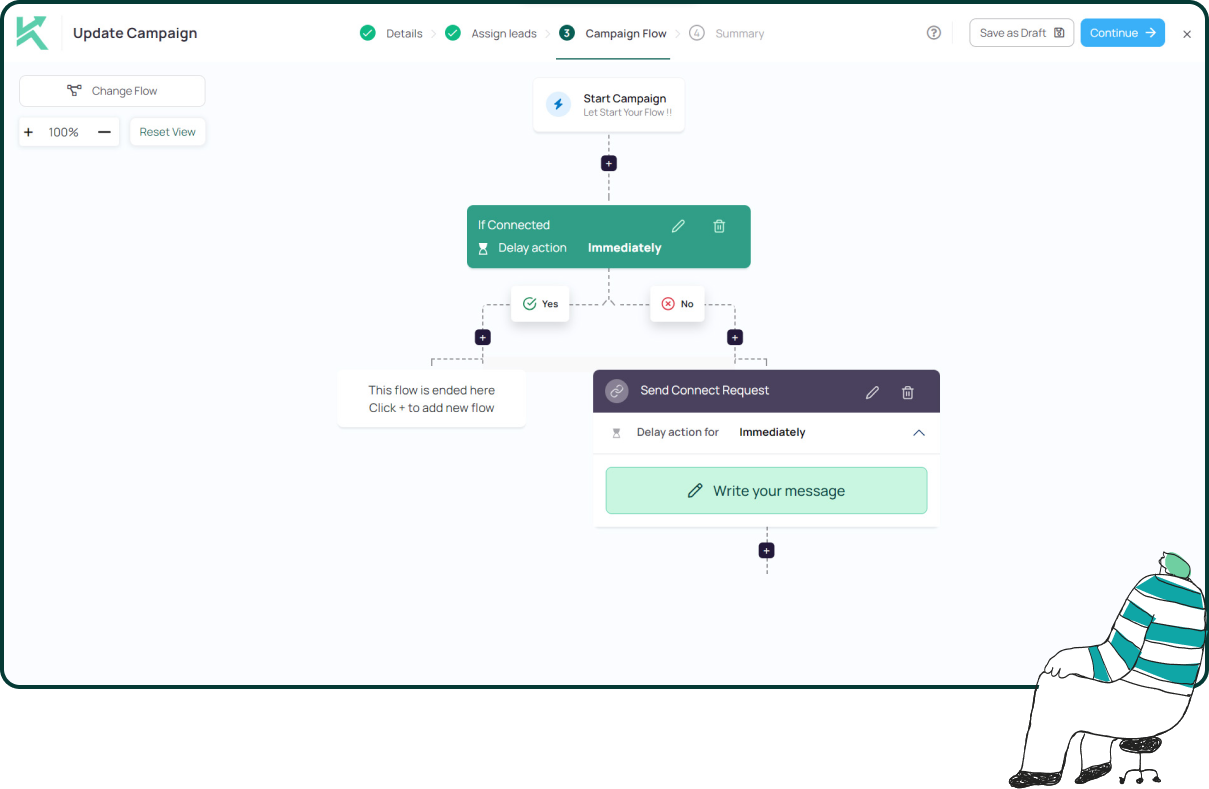
11x Your LinkedIn® Outreach With
Automation and Gen AI
Harness the power of LinkedIn® Automation and Gen AI to amplify your reach like never before. Engage thousands of leads weekly with AI-driven comments and targeted campaigns—all from one lead-gen powerhouse platform.
Frequently Asked Questions
No. Using AI to help draft a comment is not against LinkedIn's rules. The risk comes from software that automatically performs actions on your behalf, such as publishing comments without human approval or engaging in large-scale automated activity. Reviewing and posting AI-assisted comments yourself is generally considered a much safer approach.
LinkedIn is more likely to detect patterns of automated or inauthentic behaviour than whether AI was used to write a comment. Repetitive wording, identical comments across multiple posts, unusually high activity, and bot-like timing are stronger signals than AI-generated text itself.
They can if they're low quality. Generic comments that add little value are less likely to generate meaningful engagement, which can reduce visibility over time. Thoughtful, relevant comments that contribute to the conversation are far more likely to support your reach.
The best AI-assisted comments reference something specific from the original post, add a genuine opinion, ask a relevant question, or share a brief personal insight. Editing the draft to match your natural tone also helps make the comment feel authentic.
Drafting comments with AI and having a human review each one is the safer and more effective approach. Fully automated publishing removes human judgement, increases the risk of repetitive behaviour, and is more likely to violate LinkedIn's automation policies.
There is no official limit from LinkedIn. Instead of focusing on volume, prioritize quality and consistency. A handful of meaningful comments on posts from your ideal customers or industry is generally more valuable than dozens of generic responses.
Yes. Consistently leaving thoughtful comments on posts from your target audience helps build familiarity before outreach begins. Prospects who have already seen you contributing useful insights are often more receptive to connection requests and conversations.
Use AI to identify relevant posts and draft personalized comments, but keep a human responsible for reviewing, editing, and approving every comment before it is published. This combines the efficiency of AI with the judgement and authenticity that LinkedIn encourages.