
Cold DMs get ignored because they arrive from strangers. So stop being a stranger first.
That is the whole strategy. Spend two weeks showing up in a prospect’s comments with something worth reading. Then send the DM. By the time you pitch, your name is familiar, your thinking is visible, and the message lands warm.

Generative AI makes this repeatable across an entire prospect list. Here is the playbook.
What Is the Auto-Comment Warm-Up Strategy?

The auto-comment warm-up uses generative AI to draft substantive comments on your prospects’ LinkedIn posts for two weeks, with every comment human-approved, before any pitch is sent. The AI handles the heavy lifting: watching for new posts, reading them, and drafting a relevant response. You review, tweak, and approve. The prospect just sees a smart person who keeps turning up.
One rule is non-negotiable. Auto-draft, never auto-post. A person approves every comment before it publishes. That keeps you on the right side of LinkedIn’s rules on automated activity, and it keeps a bad AI guess from going out under your name.
Why Comment for Two Weeks Before Pitching?
Because warm outreach roughly doubles your numbers at every stage. Cold, context-free connection requests are accepted around 20–30% of the time. Requests sent after real engagement, like a comment thread or a shared conversation, can clear 60%. We break the numbers down in our guide to healthy acceptance rates for automated connection requests.
The pattern holds after the accept. Belkins’ study of 20 million LinkedIn outreach attempts found reply rates climb steadily with every added nurturing touch, roughly fivefold from one touch to five. Familiarity compounds.
Two weeks of comments is not a delay before the outreach. It is the outreach. The DM is just the moment it becomes a conversation.
What Does the Two-Week Schedule Look Like?

Aim for three to four meaningful touches per prospect across fourteen days, then the DM. More than that reads as stalking. Fewer, and the familiarity never forms.
| Days | Action | Goal |
|---|---|---|
| Days 1–4 | First AI-drafted comment on their newest post. Add an insight or a specific question. | Get your name in their notifications with substance attached |
| Days 5–9 | Second comment on a fresh post. Reply if they responded to your first. | Turn recognition into a light back-and-forth |
| Days 10–13 | Third comment, plus a connection request referencing the shared threads. | Convert familiarity into a first-degree connection |
| Day 14+ | The DM. Open with the conversation you already had, not a pitch. | Start a warm sales conversation |
If a prospect posts rarely, stretch the window rather than forcing touches. The schedule serves the relationship, not the other way round.
How Do You Keep AI Comments From Sounding Like AI?

Give the AI the actual post, demand a specific point of view, and ban the praise vocabulary. Three rules cover most of it.
Feed it context. The prompt should include the full post text and your role, so the draft responds to what was actually said. Require substance. Every comment must add an insight, an example, or a sharp question, never agreement alone. And blacklist the tells: “Great post,” “Thanks for sharing,” “Couldn’t agree more,” and every emoji-led opener. If a comment could sit under any post on LinkedIn, it belongs under none of them.
The fifteen-second review is the strategy. Read the draft, ask if you’d say it to their face, change one word so it sounds like you, approve.
How Do You Turn Two Weeks of Comments Into a DM That Converts?

Reference the shared thread in the first line, then make one specific, low-pressure ask. Something like: “Enjoyed going back and forth on your pricing post last week. It connects to something we’re seeing with [their segment], and I think you’d find the data interesting. Worth 15 minutes?”
No cold open. No feature list. The comments did the trust-building, so the DM only has to do the asking.
Running this manually for five prospects is easy. For two hundred, it collapses, and that is the gap Konnector.ai closes: it watches your prospect list for new posts, drafts a substantive comment for each one with generative AI, and queues everything for human approval before a single word publishes. When the warm-up window closes, the same platform sends the connection request and the DM as one signal-timed sequence, so no prospect slips through between steps. More on the mechanics in our guides to AI comments that boost LinkedIn engagement and comment-first outreach.

The Bottom Line
Generative AI auto-commenting works when it is auto-drafting, human-approving, and genuinely useful, three or four times over two weeks. Do that, and the DM stops being a pitch to a stranger. It becomes a message to someone who already knows you think clearly.

That is the entire advantage. Everyone else is still cold.
📅 Book a Free Demo → See the full comment-to-DM workflow in Konnector.ai, from post surfacing to approved engagement to booked meeting.
⚡ Sign Up Free → Launch your first two-week warm-up campaign today.
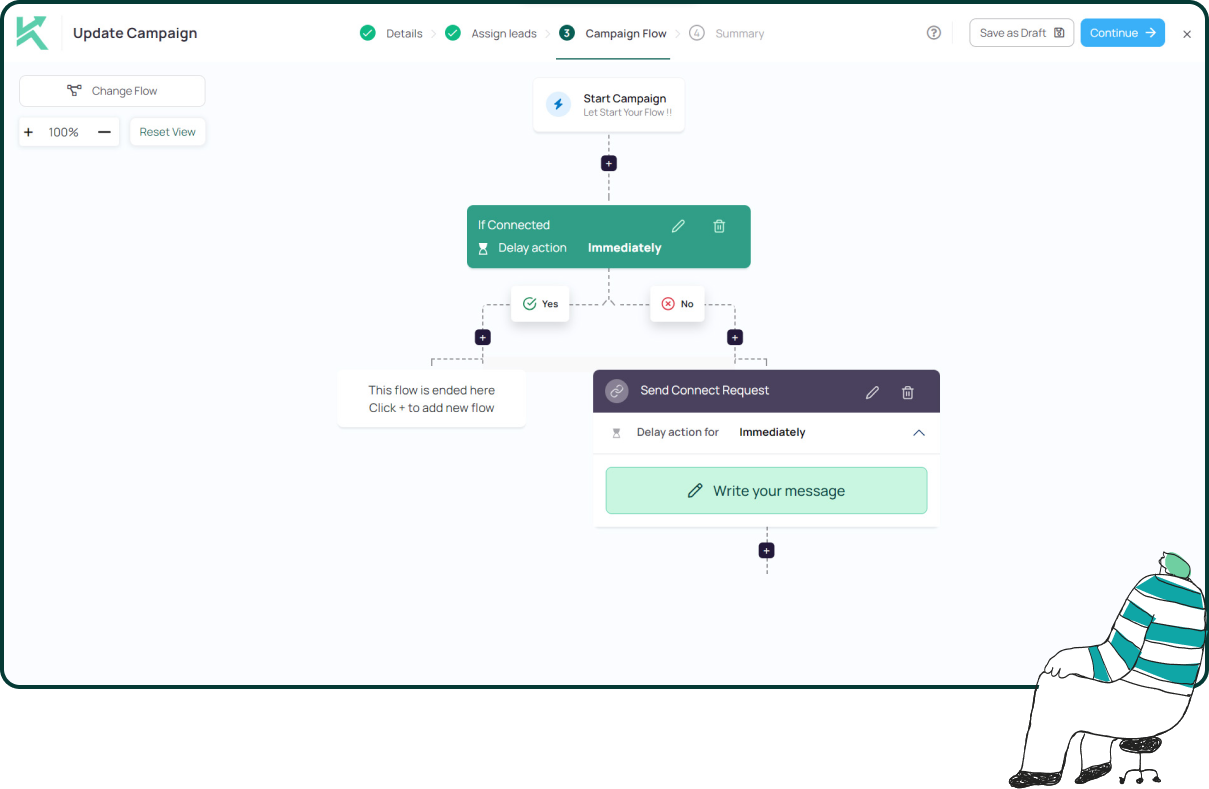
11x Your LinkedIn® Outreach With
Automation and Gen AI
Harness the power of LinkedIn® Automation and Gen AI to amplify your reach like never before. Engage thousands of leads weekly with AI-driven comments and targeted campaigns—all from one lead-gen powerhouse platform.
Frequently Asked Questions
Yes, if a human reviews and publishes them. The safest approach is to use AI for drafting only. Every comment should be reviewed, edited if needed, and manually approved before it is posted. Avoid fully automated posting, as it may violate LinkedIn's policies on automated activity.
Three to four meaningful comments over roughly two weeks is a good benchmark. The goal is to become familiar without overwhelming the prospect. If someone posts less frequently, wait for relevant opportunities instead of forcing interactions.
A good comment adds value to the conversation. It should contribute an insight, share an experience, ask a thoughtful question, or offer another perspective. Generic compliments like "Great post" or "Thanks for sharing" rarely start conversations or build credibility.
Yes. Commenting first creates familiarity and gives prospects context when they receive your connection request. Mentioning a recent discussion in the invitation often feels more natural than sending a completely cold request.
Reference your previous interaction first. Instead of introducing yourself from scratch, mention the conversation or post you've engaged with, then make a simple, relevant ask. The message should feel like a continuation of an existing discussion rather than a sales pitch.
Yes, but you'll need to extend the timeline. The objective is genuine engagement, not completing a fixed schedule. If a prospect only publishes once every few weeks, wait for opportunities to interact naturally before reaching out.
Yes, with AI handling the research and drafting. Monitoring hundreds of prospects manually is time-consuming. AI can surface new posts, generate contextual draft comments, and organize approval queues, while you remain responsible for reviewing every interaction before it goes live.
Konnector.ai monitors your prospect list, detects new LinkedIn posts, drafts contextual comments using generative AI, and places every draft into a human approval queue. After the engagement period, it can coordinate connection requests and follow-up outreach so your warm-up sequence stays consistent without becoming fully automated.